The PEPR Quantum at VivaTech 2026
VivaTech, a technology and startup conference, took place June 17–20, 2026, at Paris Expo Porte de Versailles. The PEPR Quantum was represented at several booths: the Quantum Zone by SNQ and the CNRS booth. Here’s a photo recap of the program management team’s presentations.
The Quantum Zome by SNQ
Under the patronage of Philippe Baptiste, Minister of Higher Education, Research, and Space, the Quantum Zone by SNQ was created to mark the 5th anniversary of the National Quantum Strategy (SNQ). The booth showcased all of the SNQ’s flagship programs—including the PEPR Quantum —along with component exhibits by five startups (Alice & Bob, C12, Pasqal, Quandela, Quobly), as well as Bull and Quantonation.
The first day was devoted to reviewing the SNQ’s achievements and looking ahead. On this occasion, the program management team of the PEPR spoke on several occasions:
- Harold Olivier, co-director of the PEPR Quantum and the HQI initiative at Inria, participated in the roundtable discussion titled “5 Years of the National Quantum Strategy: After 5 Years of Implementing the Strategy, How Can We Support the Scaling Up of Quantum Computing?” Moderated by Loïc Le Loarer, the strategy’s coordinator, this session also featured presentations by Olivier Hess (Quantum Computing France, Bull), Ming Long (DGA, Proqcima), and Audrey Martinent (IRT Nanoelec, Q-Loop).
- Sébastien Tanzilli, coordinator of the PEPR Quantum for CNRS, presented the program and its initiatives.
Question of Sovereignty
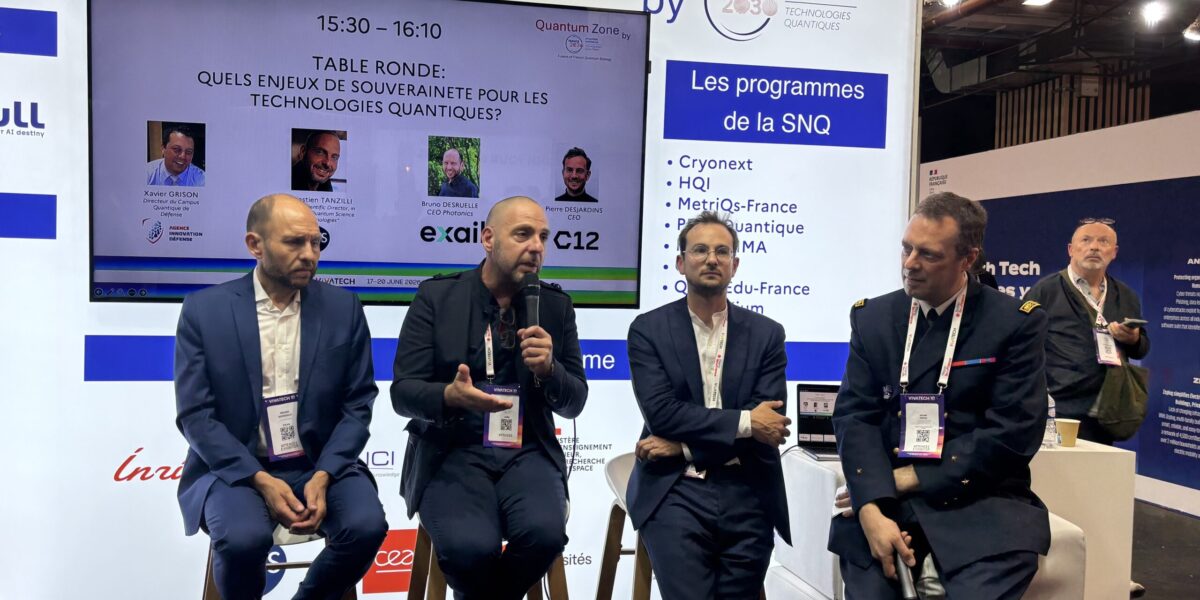
The Quantum Zone also hosted a roundtable discussion moderated by Xavier Grison, director of the Defense Quantum Campus (Agence Innovation Défense, DGA). Speakers included Pierre Desjardins, CEO of C12; Bruno Desruelle, CEO of Photonics at EXAIL; and Sébastien Tanzilli.
The discussion focused on sovereignty issues related to quantum technologies, including, for example, the need for a guaranteed value chain at the European level and maintaining continuity between basic research and industry. Next, the speakers addressed the issue of a limited talent pool, emphasizing the need to create tailored training programs to recruit PhD students and postdocs, thereby ensuring the long-term sustainability of the field.
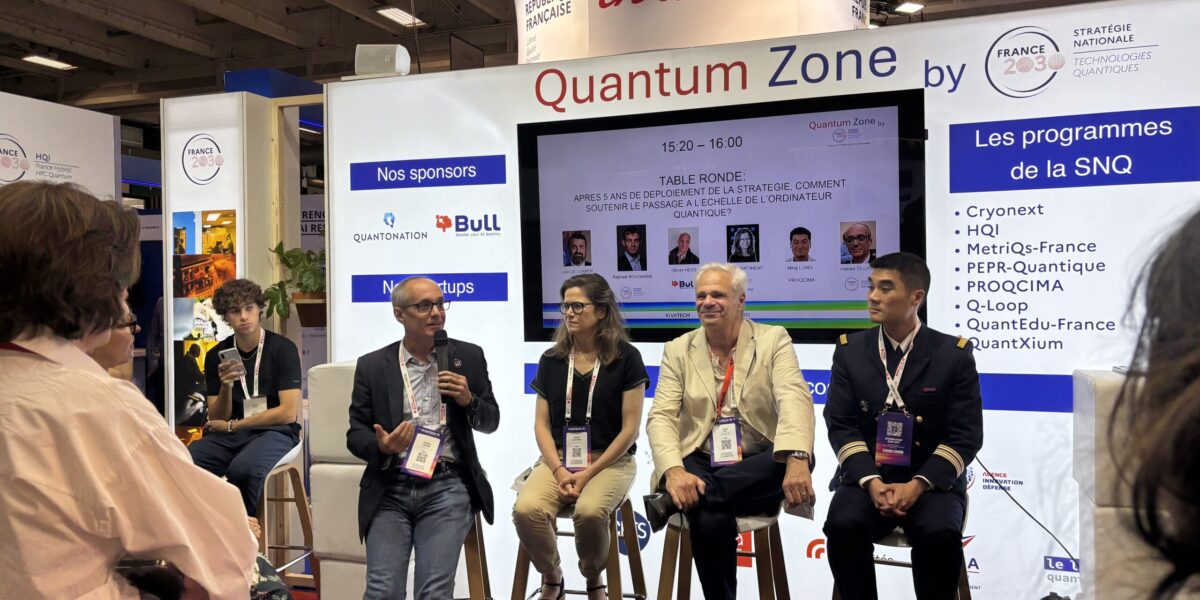 Harold Ollivier, Audrey Martinent, Olivier Hess et Ming Long lors de la table ronde sur la Stratégie Nationale Quantique. © PEPR Quantique
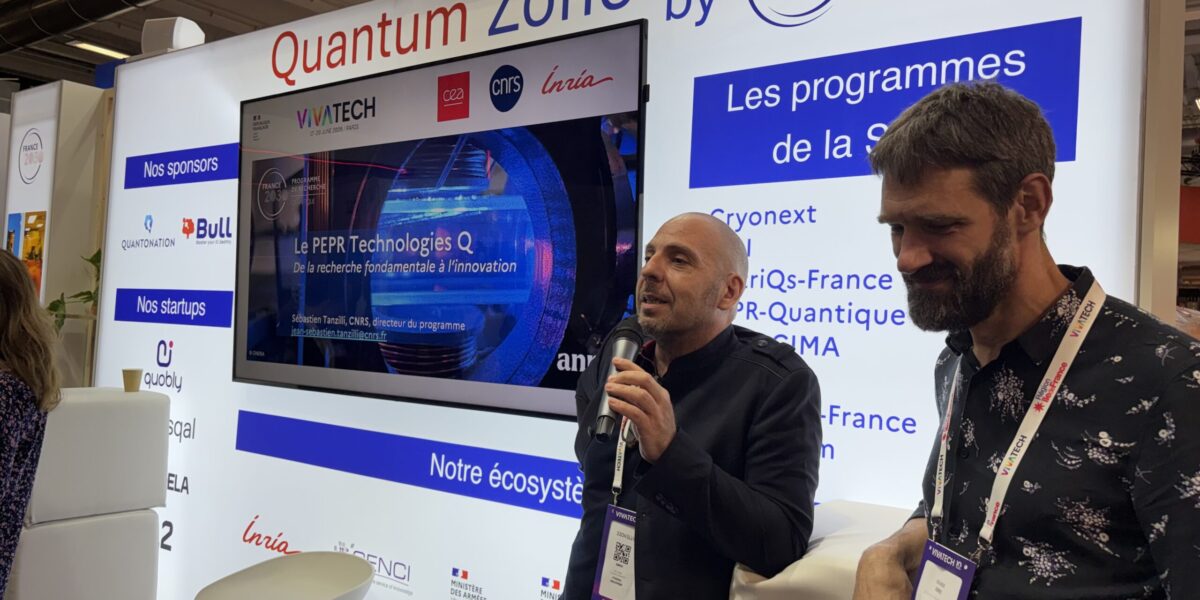
The PEPR Quantum at the CNRS Booth at VivaTech
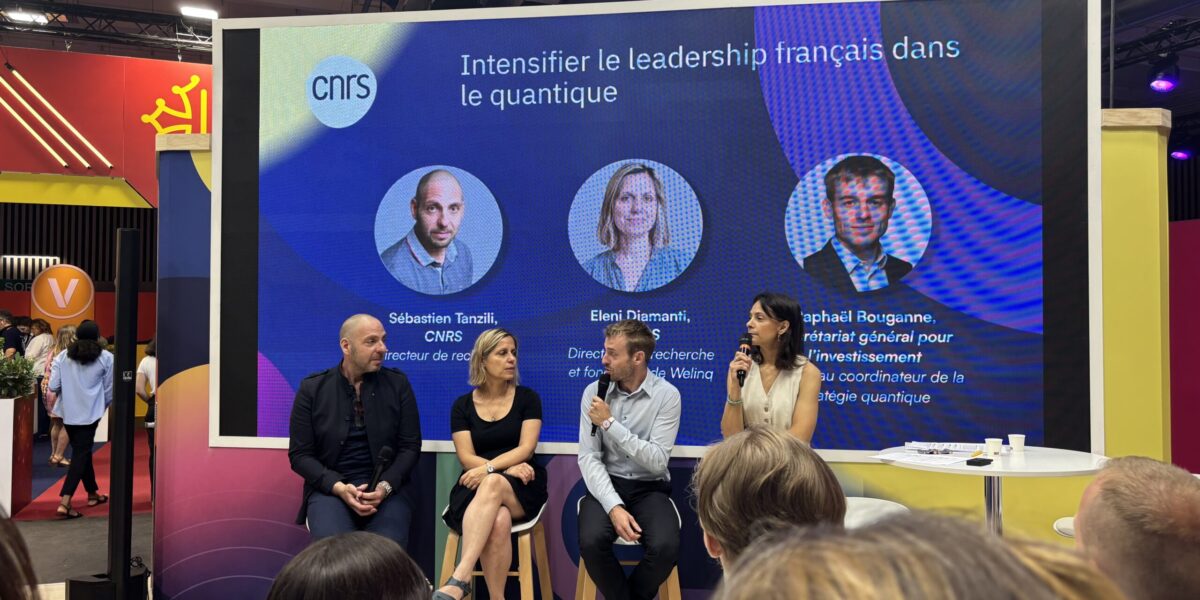
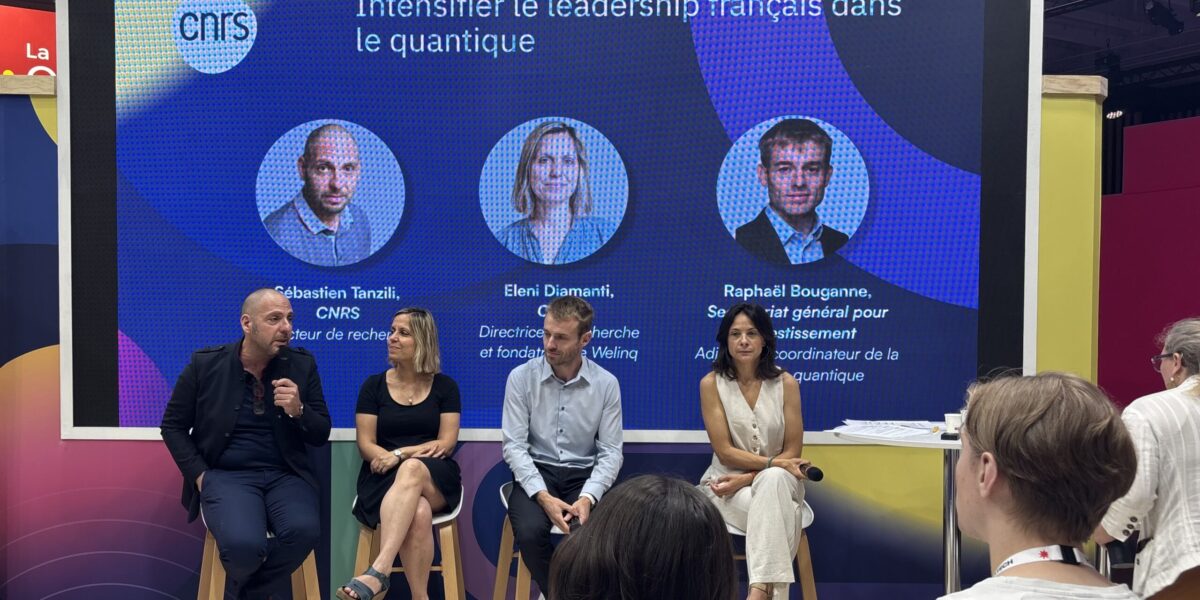
Moreover, Sébastien Tanzilli, a CNRS research director at INPHYNI, took part in a discussion on French leadership in quantum technology at the CNRS booth. Joining him were Eleni Diamanti, a CNRS research director at LIP6, founder of Welinq, and co-leader of the PEPR’s QCommTestbed project, as well as Raphaël Bouganne, deputy coordinator of the SNQ.
This was an opportunity for Sébastien Tanzilli to reiterate the imperative of establishing a solid and sustainable infrastructure system capable of supporting research, innovation, and technology transfer to industry. The CNRS, as a pioneer in quantum research, plays a key role in this effort. Start-ups emerging from CNRS laboratories perfectly illustrate the need for a long-term commitment to develop mature technologies: nearly 20 years of research are often required to move from the laboratory to an industrial application, noted Eleni Diamanti.
At the European level
In the face of international competition, particularly from the United States and China, European cooperation is a key driver. As Raphaël Bouganne emphasized, it is not just a matter of competing, but of combining education, research, and industry so that France can build a resilient and competitive ecosystem.
To ensure the sustainability of this ecosystem, Sébastien Tanzilli identifies two priorities:
- Rooting young talent in France
- Ensure the continuity of expertise and strengthen research infrastructure to keep France at the forefront of innovation
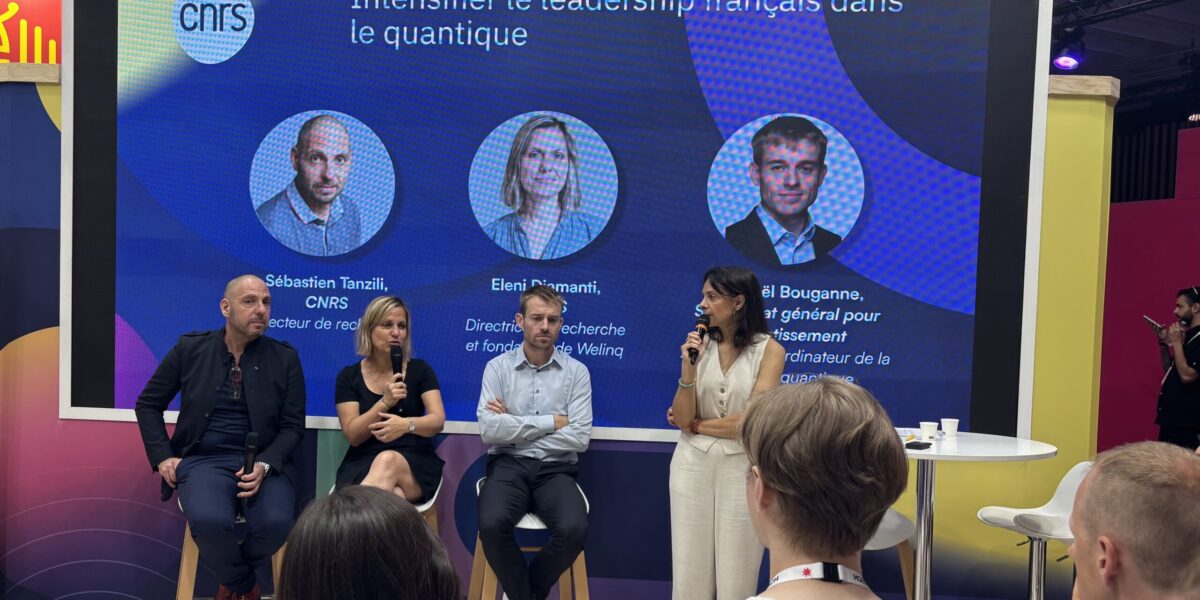 Sébastien Tanzilli, Eleni Diamanti et Raphaël Bouganne lors de la table ronde sur le leadership français dans le quantique. © PEPR Quantique
Latest news
No news
More news Highlights