2026 Annual Meeting of the QubitAF project
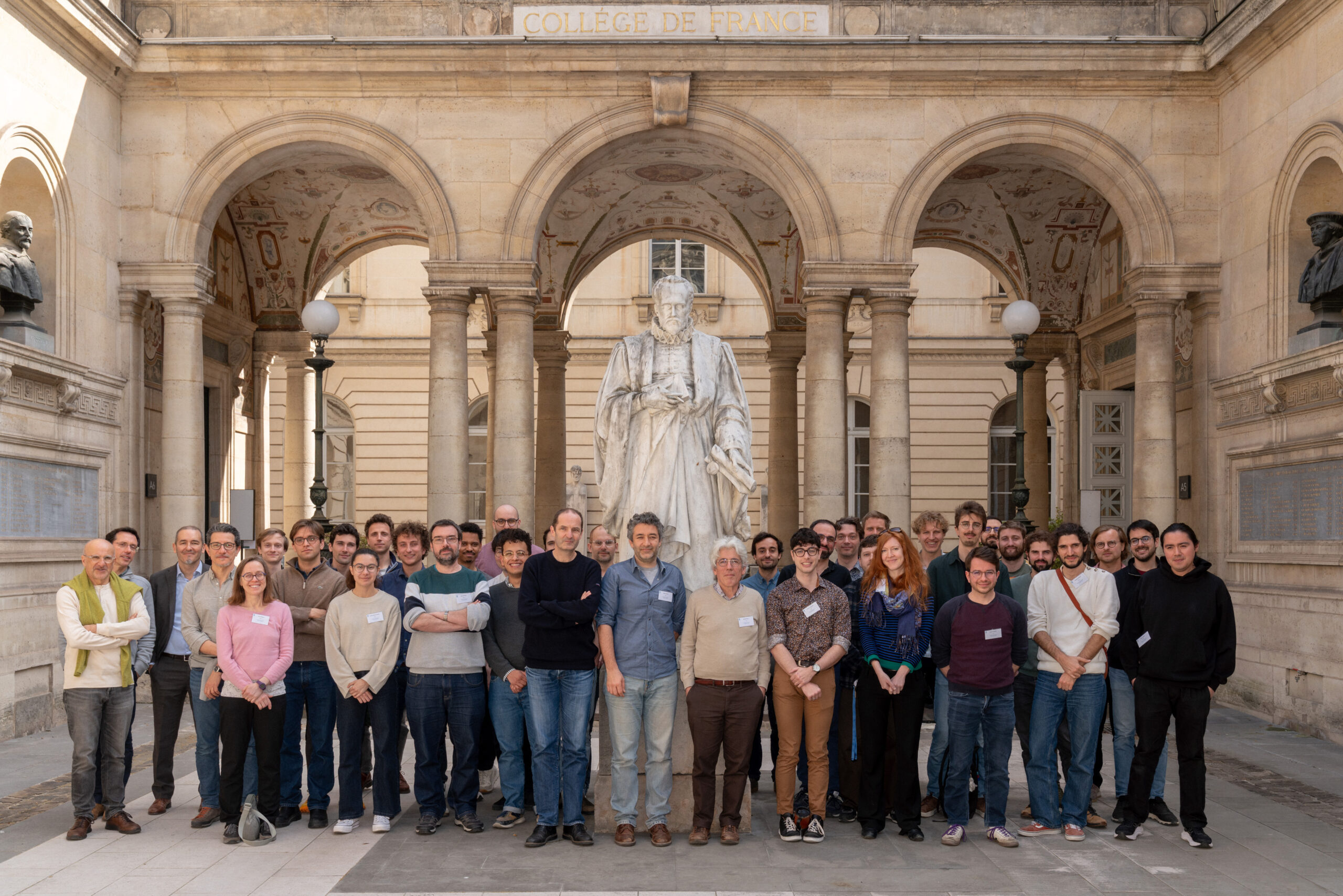
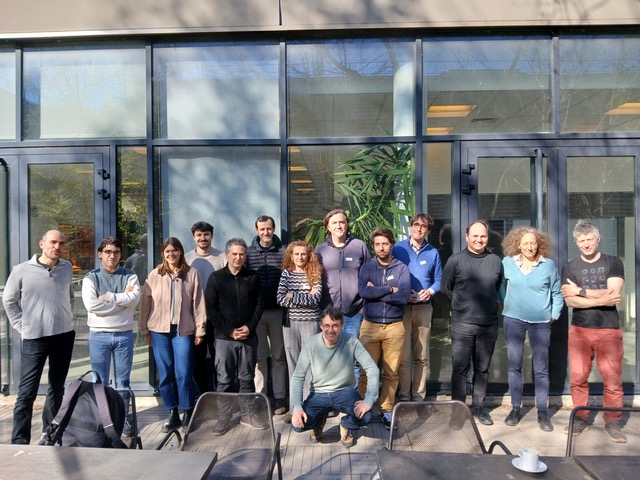
The teams involved in the QubitAF project of the PEPR Quantum met at the Collège de France in Paris on Monday 23 and Tuesday 24 March 2026 for their annual meeting.
The aim of the event was to give all project members the opportunity to present their recent work and findings, as well as to facilitate discussions between the various teams within the consortium regarding the organisation and progress of the project.
What is QubitAF ?
Led by Antoine Browaeys, a CNRS research director, and David Clément, a lecturer and researcher at Université Paris Saclay at the Institut d’Optique, QubitAF aims to develop the potential of cold-atom platforms, which have already shown promise for quantum simulation. Among the new platforms developed as part of QubitAF are, for example, a fermionic simulator and a controlled-dissipation simulator. The project’s researchers are also using new experimental tools and improving their performance to achieve greater programmability in experiments. The teams are also working on validating the results of simulators with large numbers of atoms and studying the influence of dissipation on entanglement. Finally, they are developing practical applications as well as online access to a simulator.
Presentations by the RobustSuperQ project, the EquipEx+ aQCess consortium and Antoine Georges
For the 2026 edition, the QubitAF coordinators decided to highlight synergies with two other projects under the PEPR. Participants were therefore able to benefit from presentations by:
- DDenis Vion, a CEA researcher at the Service de physique de l’état condensé (SPEC) and coordinator of the RobustSuperQ project. He began by presenting a history of the development of superconducting qubits, particularly through the experiments conducted in the 1980s by John Clarke, Michel Devoret and John Martinis, which earned them the Nobel Prize in Physics in 2025. The second part of his presentation focused on the work carried out by RobustSuperQ, which aims to accelerate French R&D on superconducting and hybrid qubits that are inherently protected against decoherence.
- Guido Pupillo, lecturer and researcher at the University of Strasbourg’s Institute of Supramolecular Science and Engineering (ISIS). His presentation focused on the EquipEx+ aQCess, which he co-coordinates and which aims to establish a digital quantum computing platform, open to both academics and industry, based on networks of ultra-cold Rydberg atoms trapped in optical lattices.
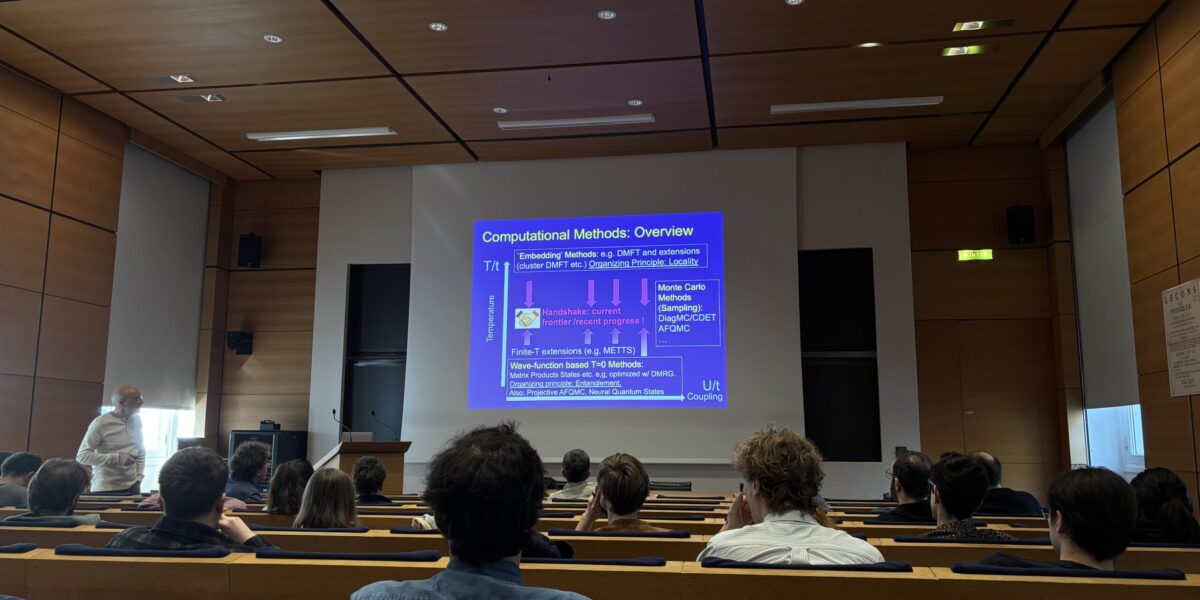
The QubitAF coordinators also wished to exchange views and discuss the prospects for cold-atom experiments in the simulation of correlated fermions with Antoine Georges. A professor at the Collège de France holding the Chair in Strongly Correlated Quantum Matter and director of the Center for Computational Quantum Physics at the Flatiron Institute (New York), Antoine Georges is an internationally recognised expert in the physics of correlated fermions. He gave a talk entitled ‘Analog Quantum Simulators and Classical Many-Body Methods: A Productive Race’.
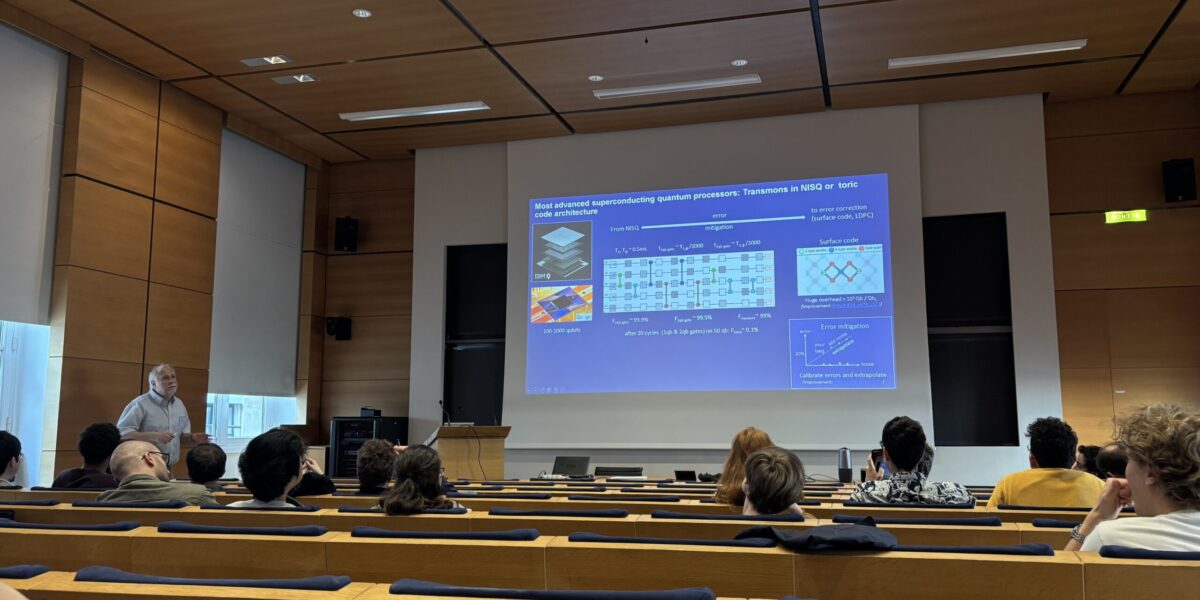 Denis Vion, chercheur CEA au SPEC et coordinateur du projet RobustSuperQ. © PEPR Quantique
Scientific presentations by members of QubitAF
Monday 23 March
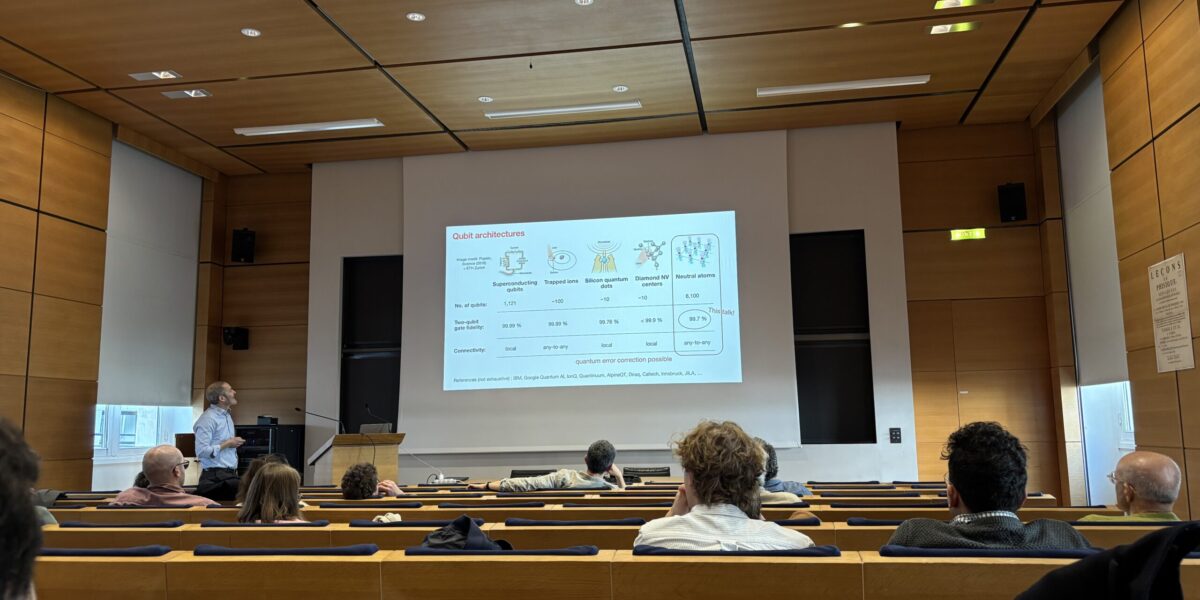
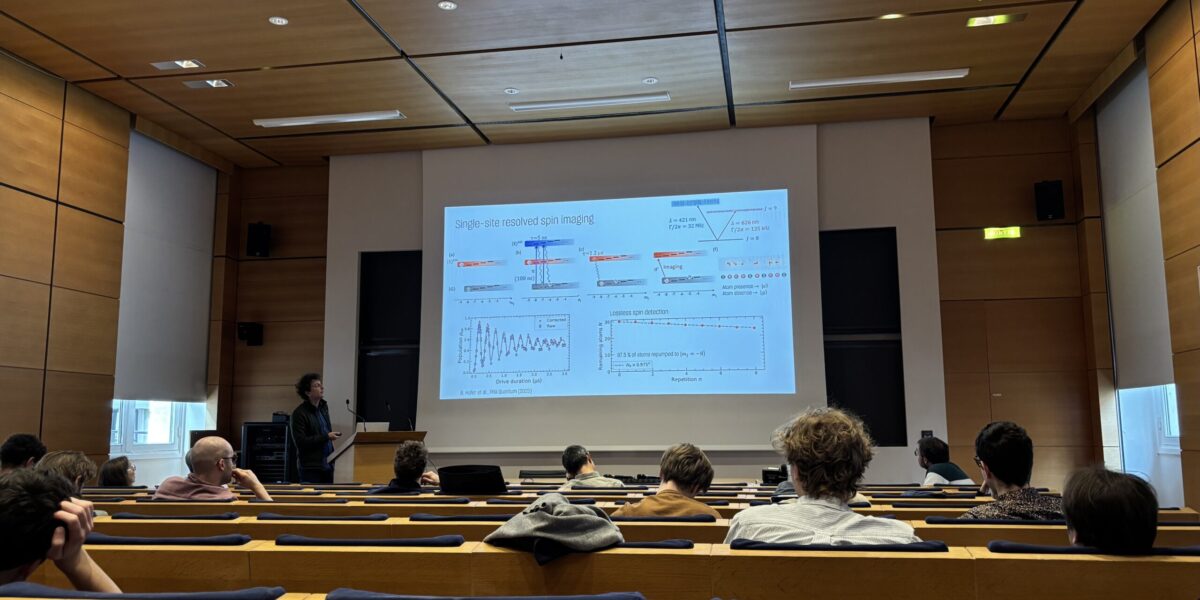
- Thierry Lahaye, CNRS research director at LCF: Rydberg arrays at IOGS: old and new plateforms (OMEDOQ & CHADOQ)
- Lukas Klein, CNRS PhD student at LCF: A New-Generation Rydberg Atom Quantum Simulator. A new experiment.
- Michel Brune, CNRS research director at Laboratoire Kastler Brossel (LKB): Circular Rydberg states for quantum simulation.
- Gautier Creutzer, Collège de France PhD student at LKB: Observation of spin exchange between laser-trapped circular Rydberg atoms.
- Mathis Pepin, Sorbonne Université PhD student at LKB: Singlet-triplet oscillations of trapped circular strontium atoms.
- David Clément, lecturer and researcher at Université Paris Saclay at LCF and co-coordinator of QubitAF: Helium quantum simulator: critical correlations in Bose gases and laser-cooled Fermi gases.
- Henri Coquinot, CNRS PhD student at LCF: Producing a metastable Helium-3 Fermi sea – Toward probing Fermi-Hubbard in momentum space.
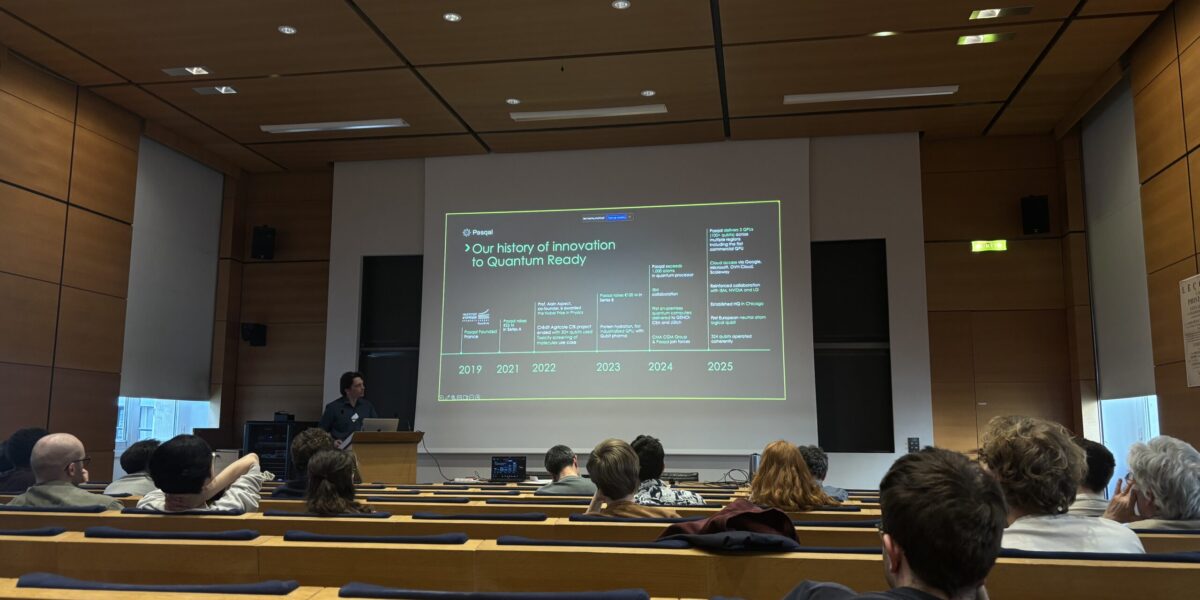
- Louis-Paul Henry, VP Quantum Applications at Pasqal: Survey of the activities on applications at Pasqal.
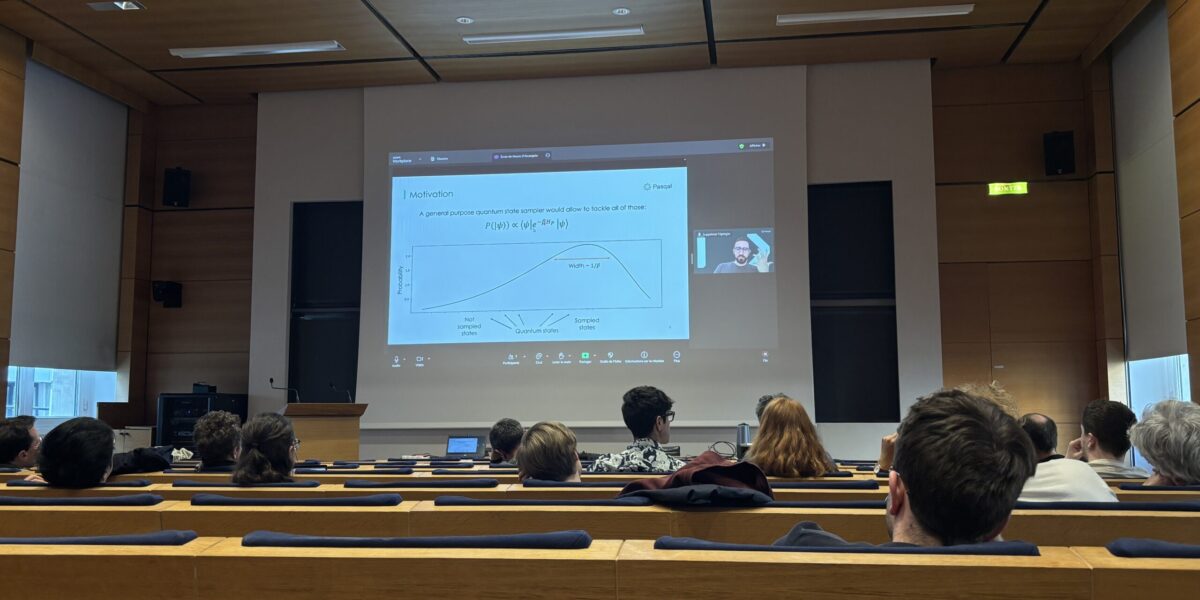
- Mauro D’Arcangelo, engineer at Pasqal: Quantum Markov chain Monte Carlo with programmable quantum simulators.
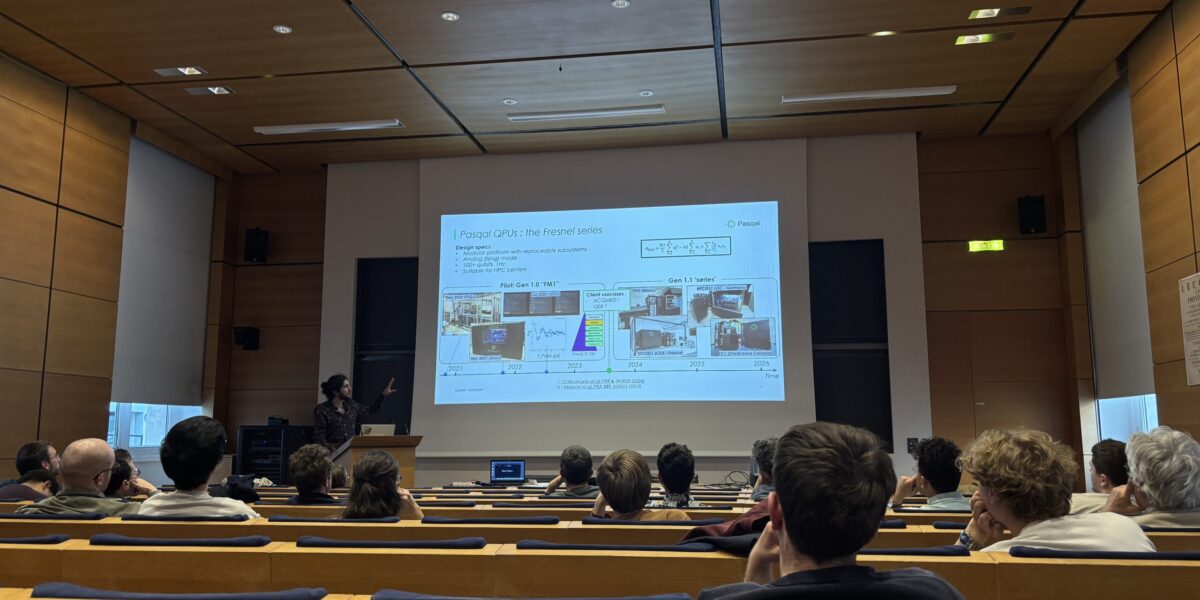
- Guillaume Villaret, engineer at Pasqal: Certifying a 300‑Qubit Rydberg QPU for Quantitative Quantum Simulation of a Real Material.
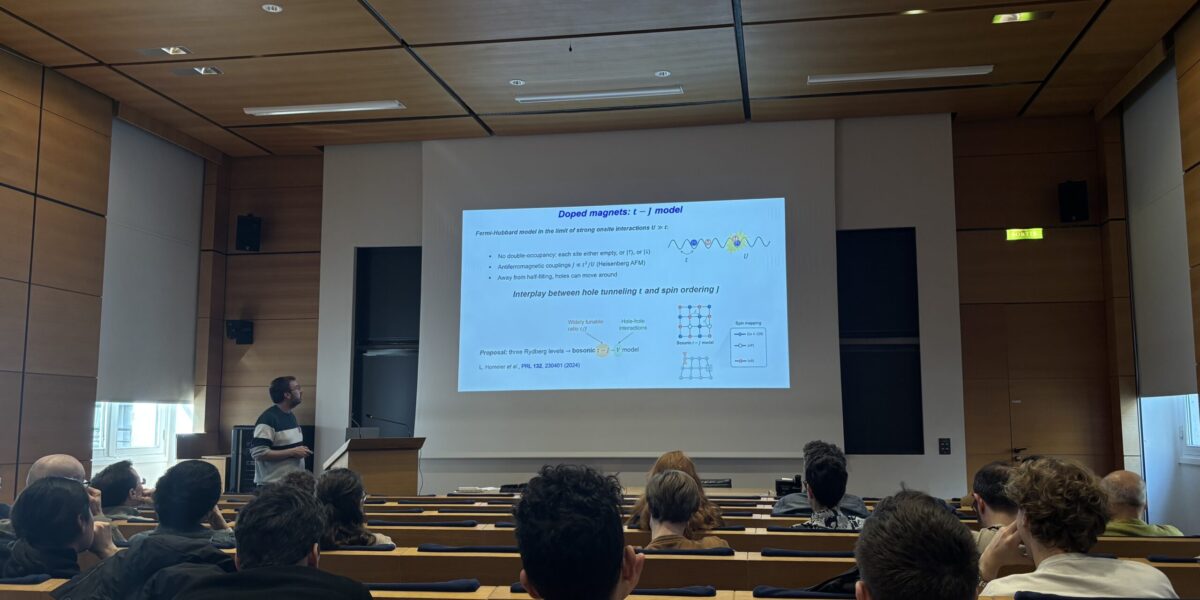 Thierry Lahaye, directeur de recherche CNRS au LCF. © PEPR Quantique
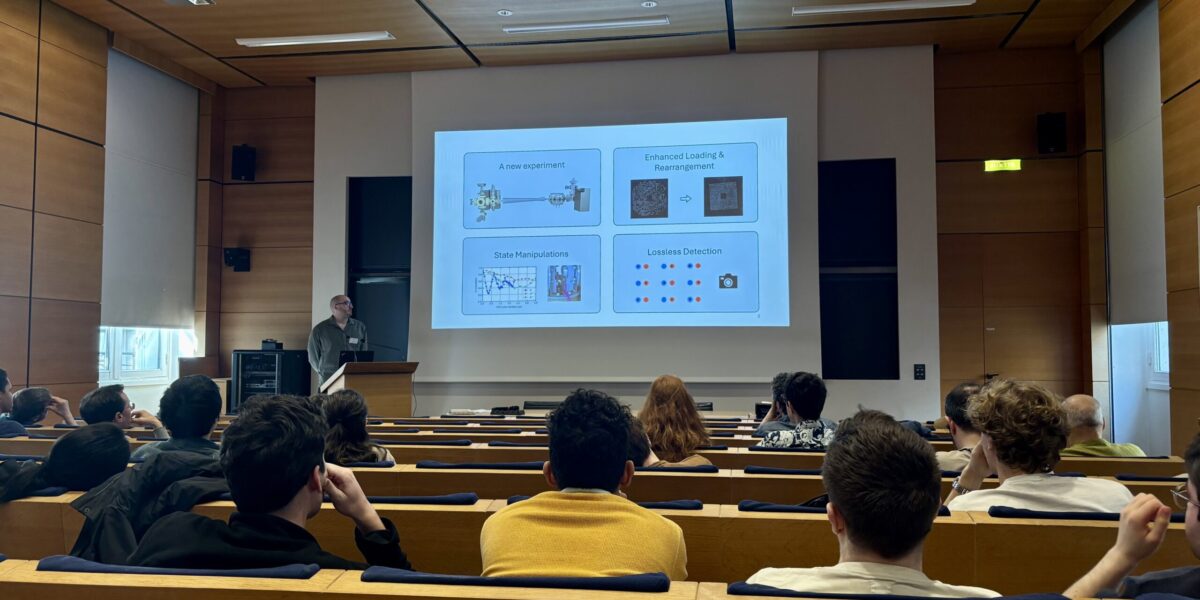
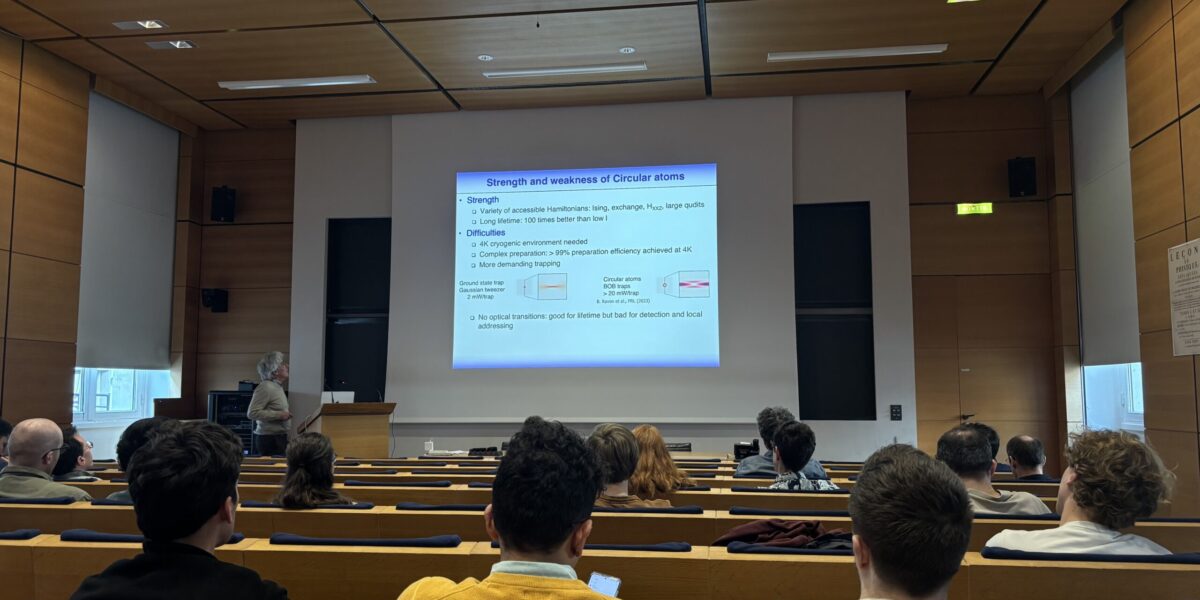
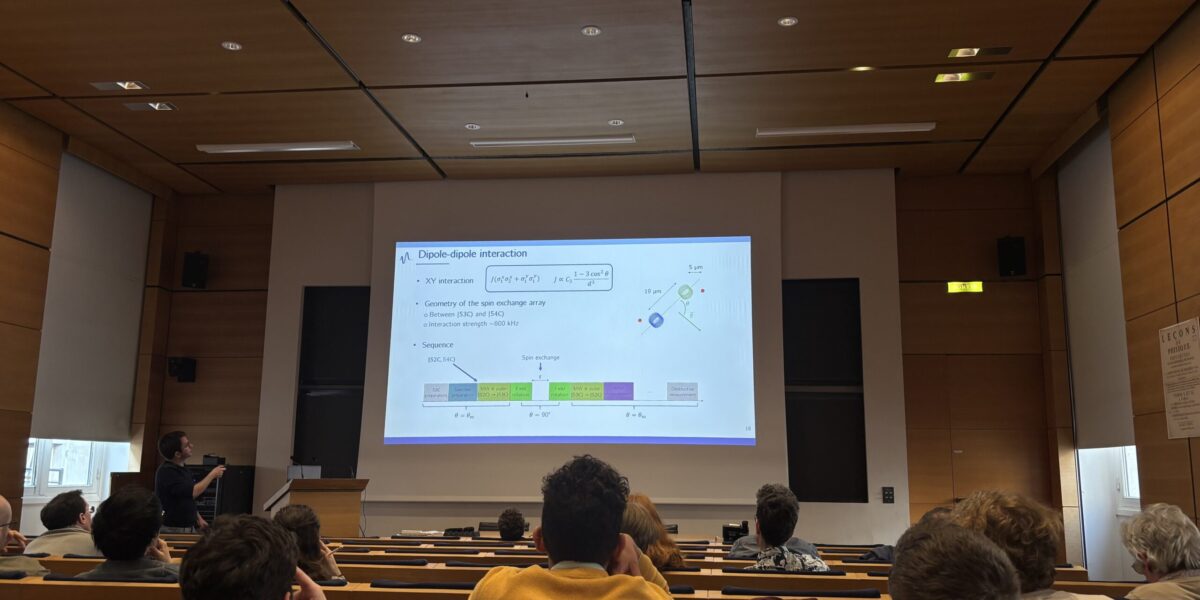
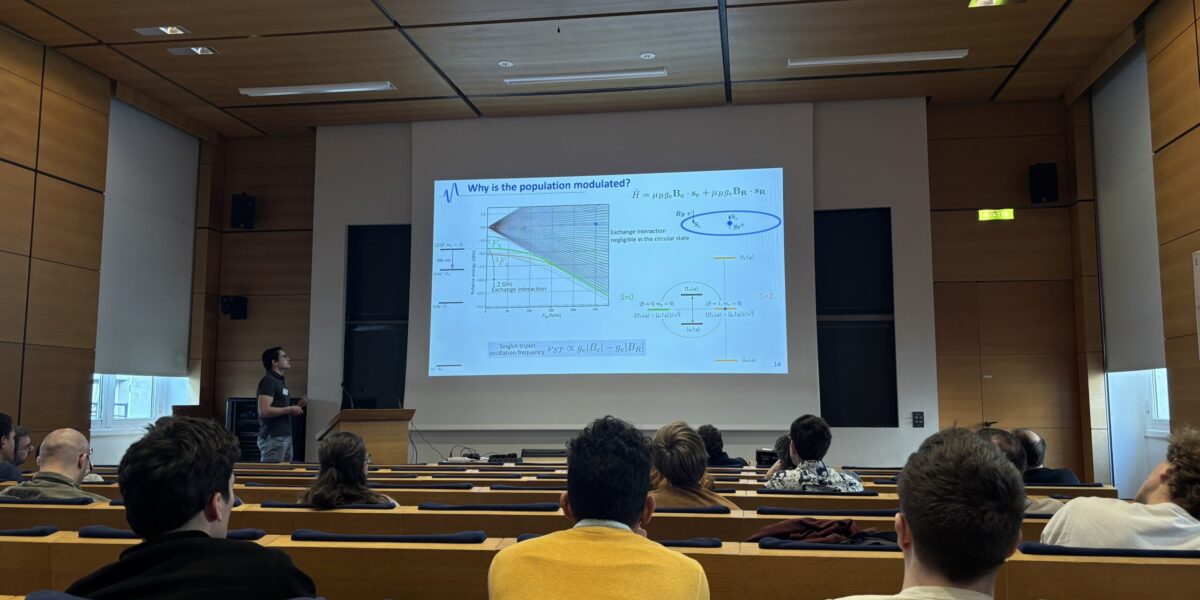
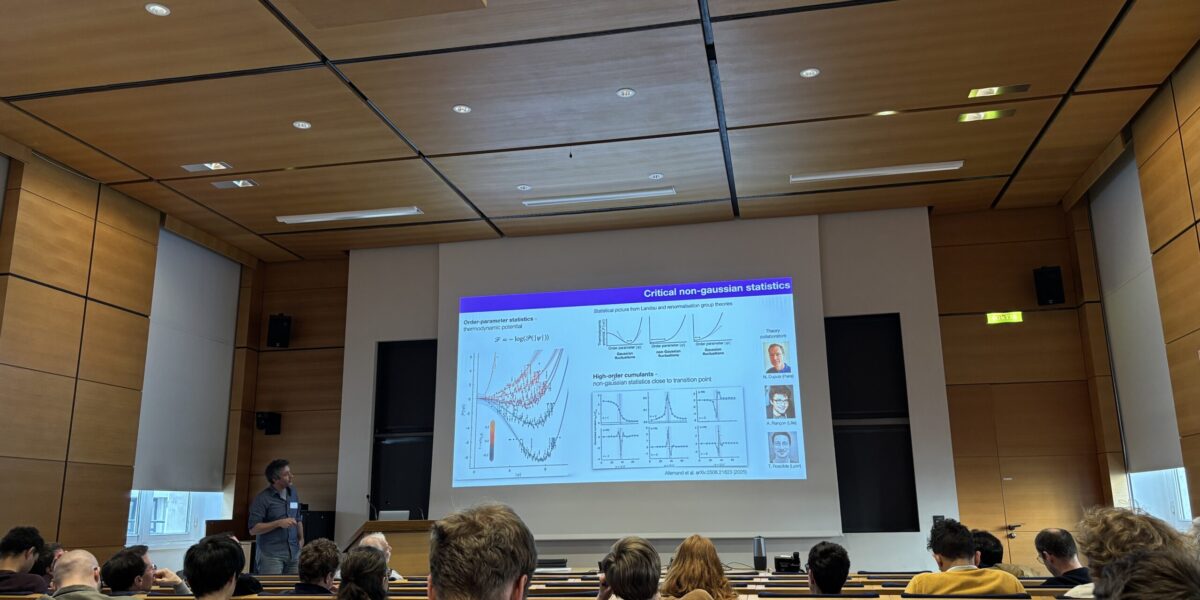
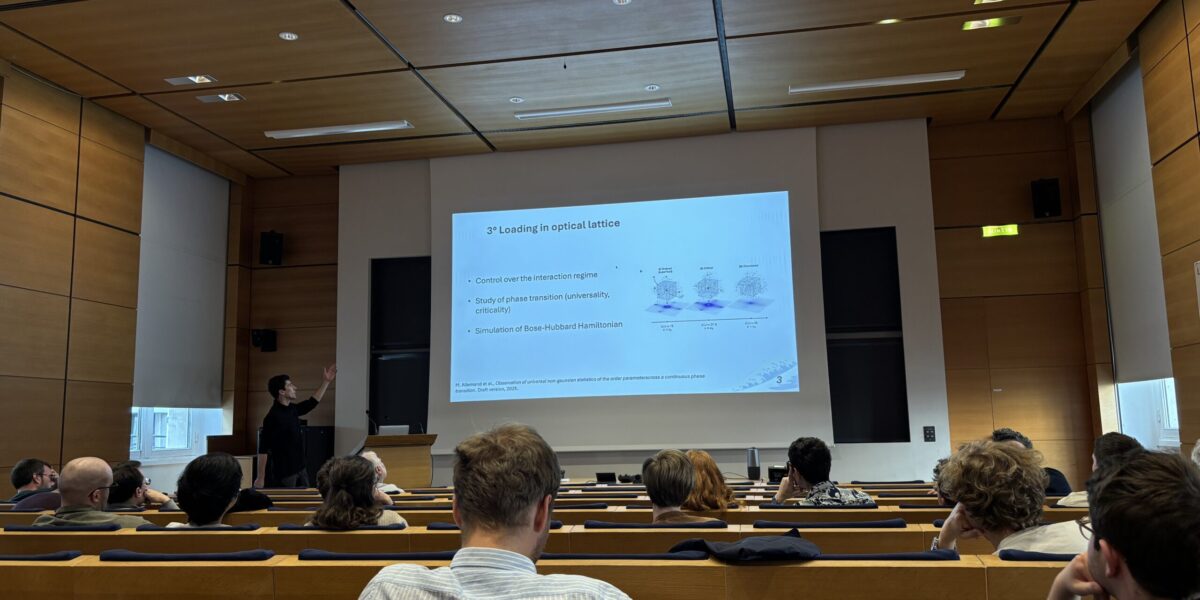
Tuesday 24 March
- Anna Minguzzi, CNRS research director at Laboratoire de physique & modélisation des milieux condensés (LPMMC): Spectral function of strongly interacting quantum mixtures.
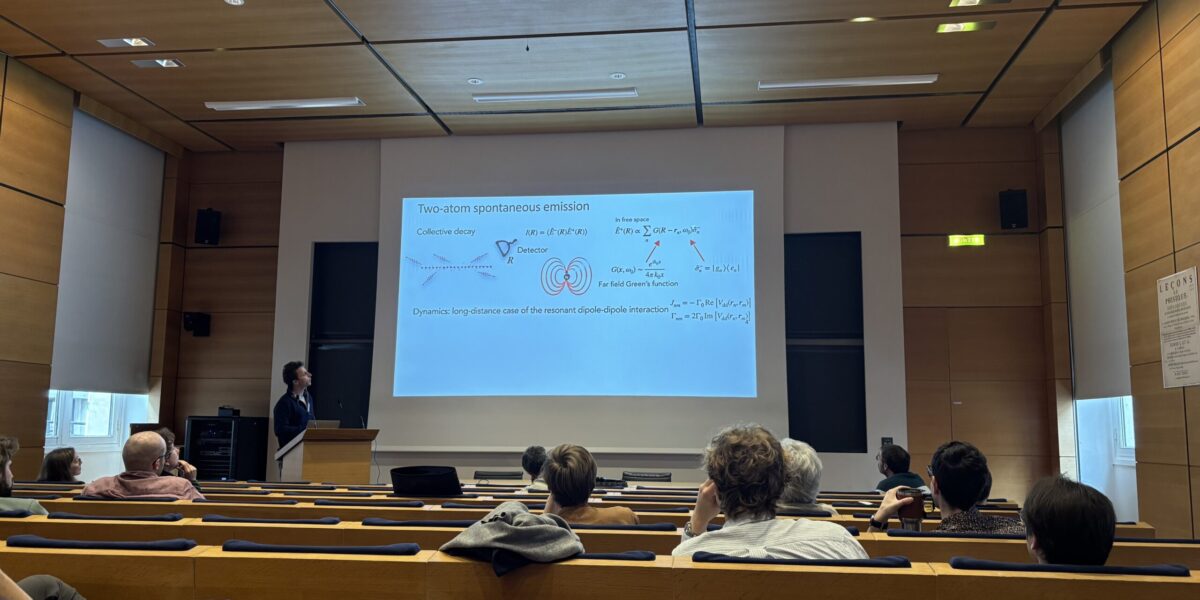
- Igor Ferrier-Barbut, CNRS researcher at LCF: Light-matter interaction in free-space two-level atom ensembles.
- Giulio Biagioni, post-doc at Institut d’Optique Graduate School at LCF: Collective light scattering in arrays of single dysprosium atoms.
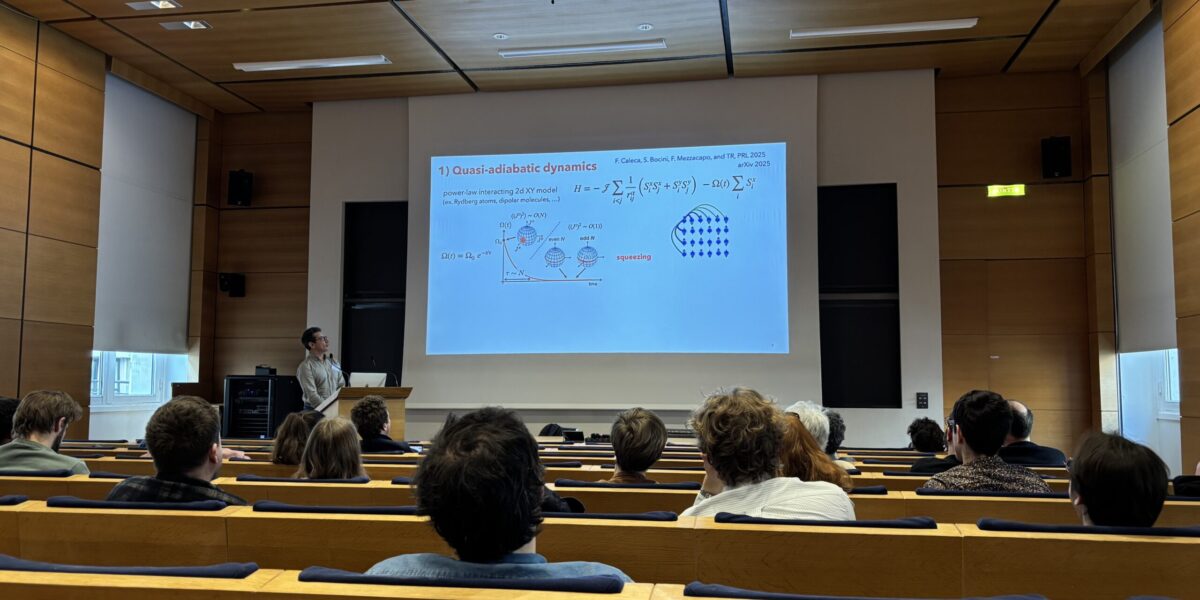
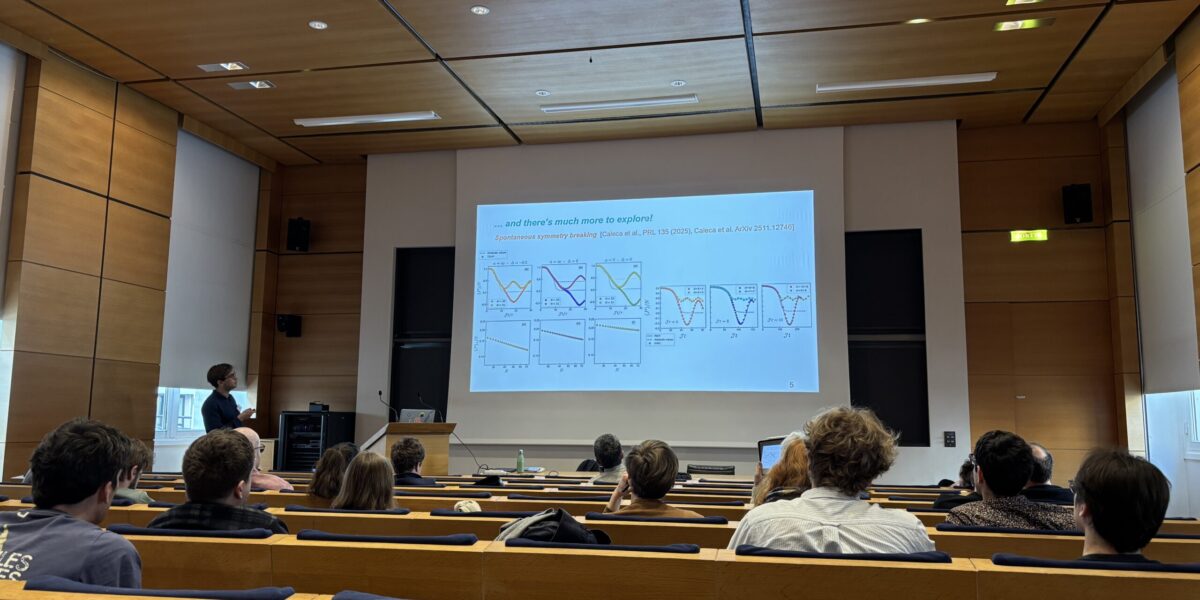
- Tommaso Roscilde, lecturer and researcher at ENS de Lyon at Laboratoire de Physique (LPENSL): Survey of the activities at the ENS of Lyon : Scaling up many-body entanglement with quantum simulators.
- Filippo Caleca, ENS de Lyon PhD student at LPENSL: Valence-bond solid and Luttinger liquids with dipolar atoms on triangular ladders.
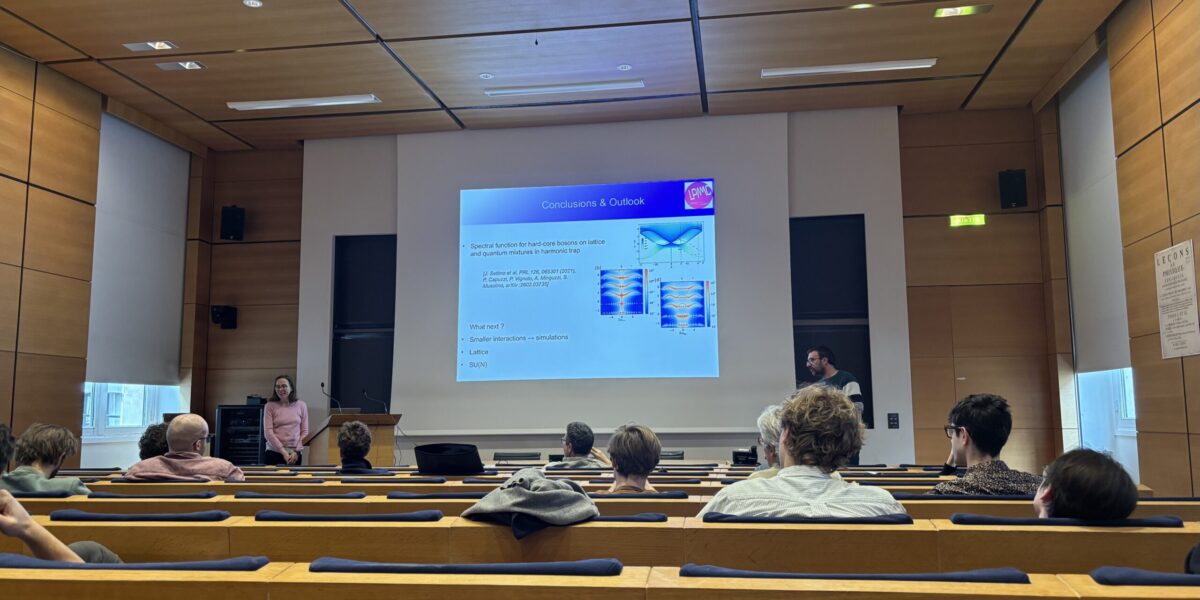 Anna Minguzzi, directrice de recherche CNRS au Laboratoire de physique & modélisation des milieux condensés (LPMMC). © PEPR Quantique
Latest news
No news
More news Events