General Assembly for the Projects
DIQKD, QCommTestbed and QMemo
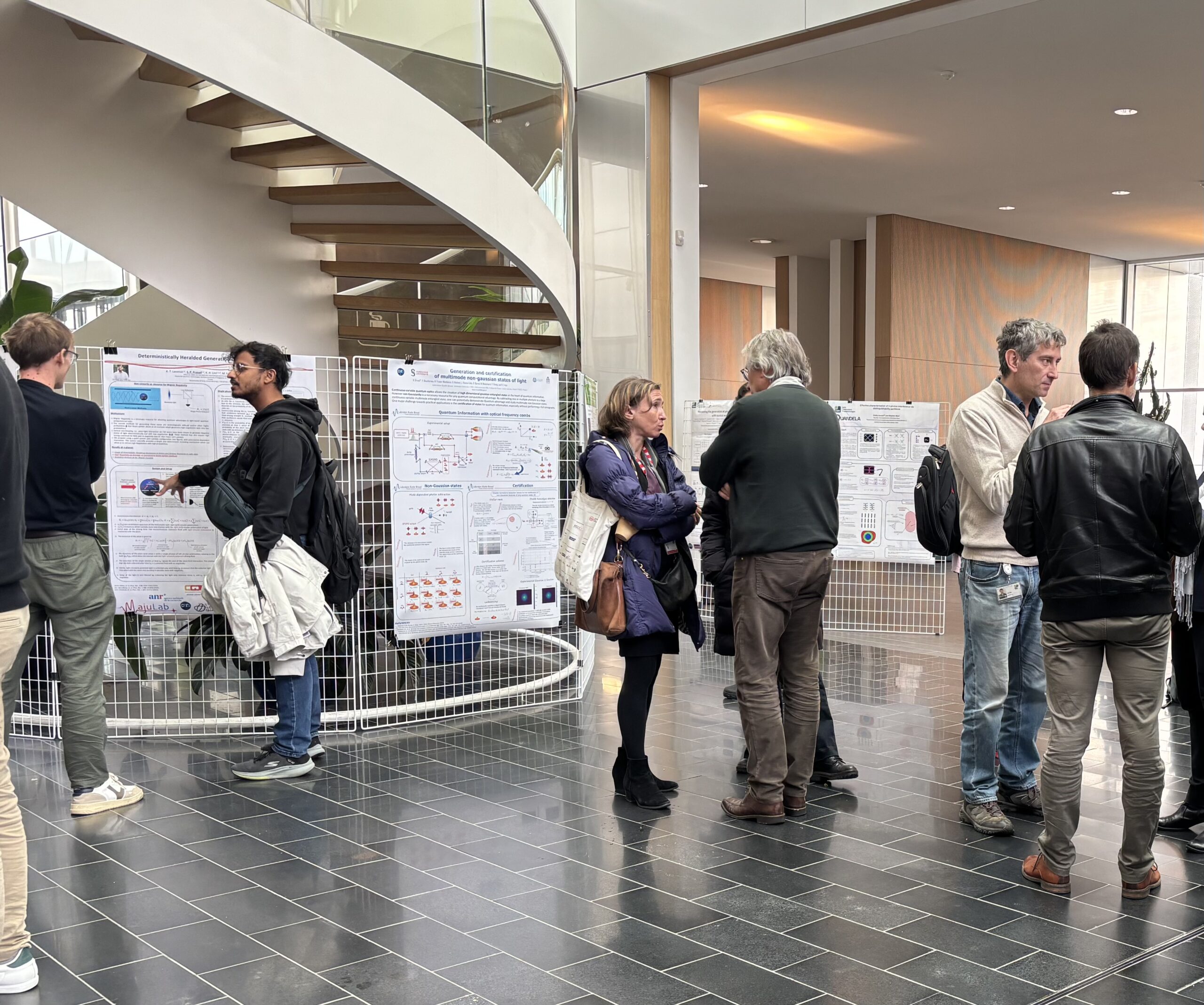
On 13 March 2026, the DIQKD, QCommTestbed and QMemo projects under the PEPR Quantum held their joint general meeting. The event took place at C2N on the Saclay site and was attended by around thirty participants, the majority of whom were early-career researchers.
The aim of the day was to share the progress made by the various teams working on the three projects. Scientific sessions were held for each project, led by a member of the consortium representing one or more laboratories or research organisations.
Overview of the projects
QCommTestbed
The QCommTestbed project was introduced by one of its lead researchers, Olivier Alibart, a lecturer and researcher at the Université Côte d’Azur’s Inphyni laboratory. He began by outlining the project’s scientific objectives and the key technological challenges involved: deploying and operating quantum network infrastructure, as well as developing quantum communication demonstrators and protocols. He then presented the two quantum communication networks deployed in France, in Île-de-France and on the Côte d’Azur.
QMemo
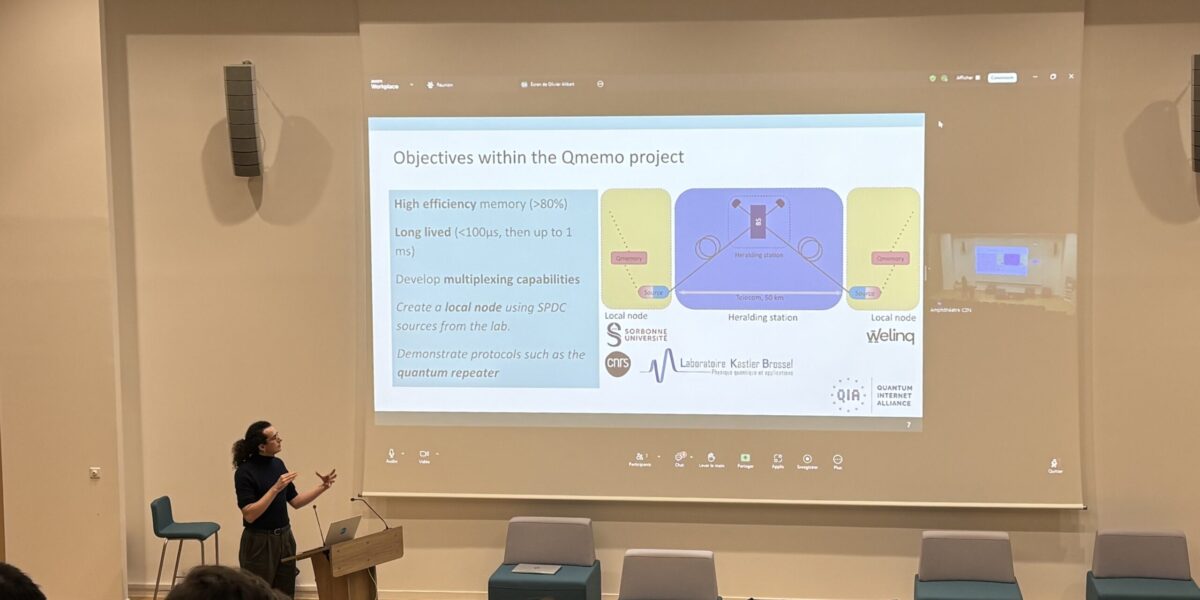
Next, Julien Laurat, a lecturer and researcher at Sorbonne University’s LKB, gave an overview of the QMemo project consortium, of which he is the coordinator. He then summarised the project’s objectives, which aim to develop new key components: quantum memories. The goal is to deploy quantum repeaters at the heart of the future quantum internet. The project follows two main strands, presented by J. Laurat, supported by two platforms: a first platform based on a cloud of cold atoms, with the aim of surpassing current performance metrics, and a platform based on doped crystals to achieve a first guided experimental demonstration.
DIQKD
Finally, the DIQKD project was presented by its lead researcher, Anthony Martin, a lecturer and researcher at the Université Côte d’Azur, at INPHYNI. This project aims to develop the first ‘device-independent’ photonic prototype for quantum key distribution. It involves a protocol offering the highest possible level of security, based on the violation of Bell’s inequalities. To achieve this, several hurdles must be overcome. This involves creating and detecting entangled states with an efficiency of over 83 per cent – a major feat in the field of photonics – as well as developing new protocols and security proofs that are more resistant to loss and/or noise and, consequently, less restrictive. Furthermore, part of the project is dedicated to finding solutions to enable this quantum key exchange over long distances outside of laboratories.
QCommTestbed – scientific sessions
- Session by Jesus Zuniga-Perez, CNRS research director at CHREA
CHREA’s role in the consortium: Develop a room-temperature GaN-based single-photon source that emits single photons at 1310 nm at room temperature. Work is being carried out in collaboration with the EquipEx+ E-DIAMANT project on the controlled generation of GaN single-photon sources in the O-band.
- Session by Olivier Alibart, co-coordinator of QCommTestbed
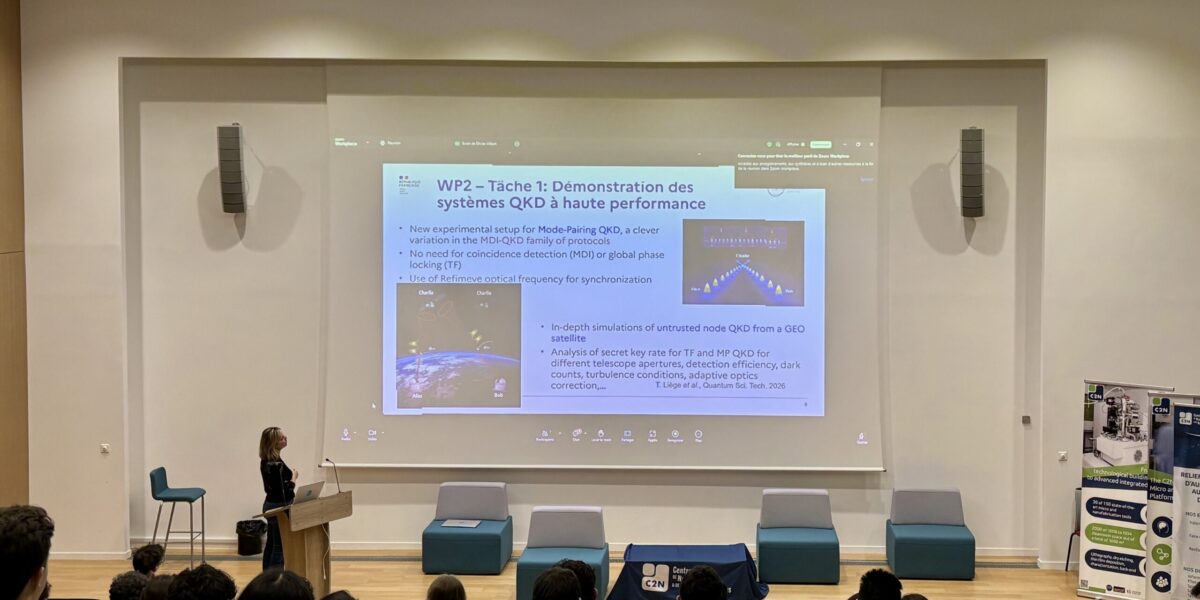
INPHYNI’ role: Set up and operate the network infrastructure deployed on the French Riviera (optical ground station / free-space quantum networking). Demonstration of high-performance QKD systems.
- Session by Eleni Diamanti, CNRS research director at LIP6 and co-coordinator of QCommTestbed
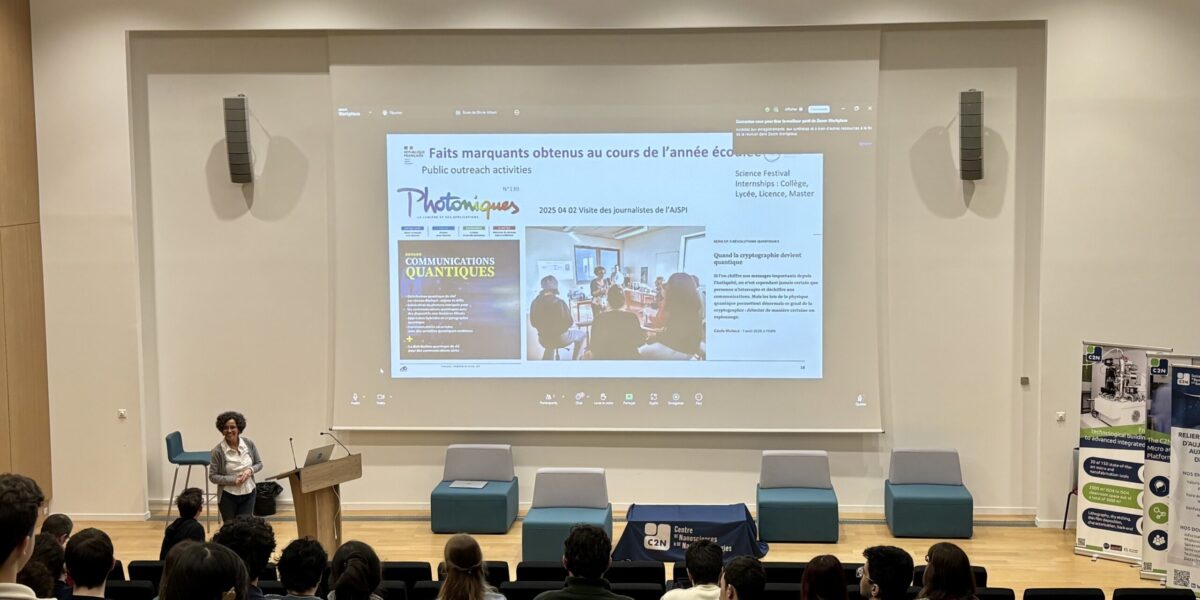
LIP6’s role: Set up and operate the network infrastructure deployed in Paris and the surrounding region. Demonstration of high-performance QKD systems. Study and demonstration of security services based on quantum and post-quantum cryptography in realistic security models and configurations. Demonstration of advanced cryptographic protocols.
- Session by Sara Ducci, lecturer and researcher at Université Paris Cité at MPQ
MPQ’s role: Involvement in the implementation of the network infrastructure in collaboration with LIP6, development of AIGaAs and AIGaS/SOI sources for quantum communication, and demonstration of quantum communication protocols.
- Session by Romain Alléaume, lecturer and researcher at Télécom Paris
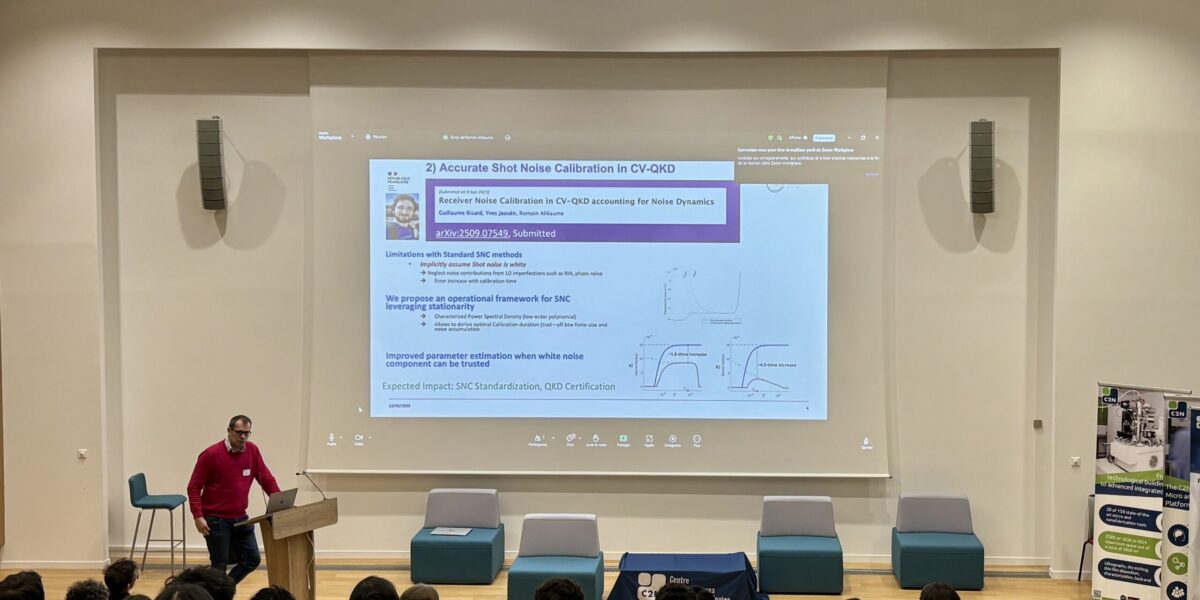
Télécom Paris’ role: Security evaluation of QKD protocols involving continuous variables. Development of new cryptographic protocols at the interface between QKD and PQC.
- Session by Dario Fioretto, CNRS researcher at C2N
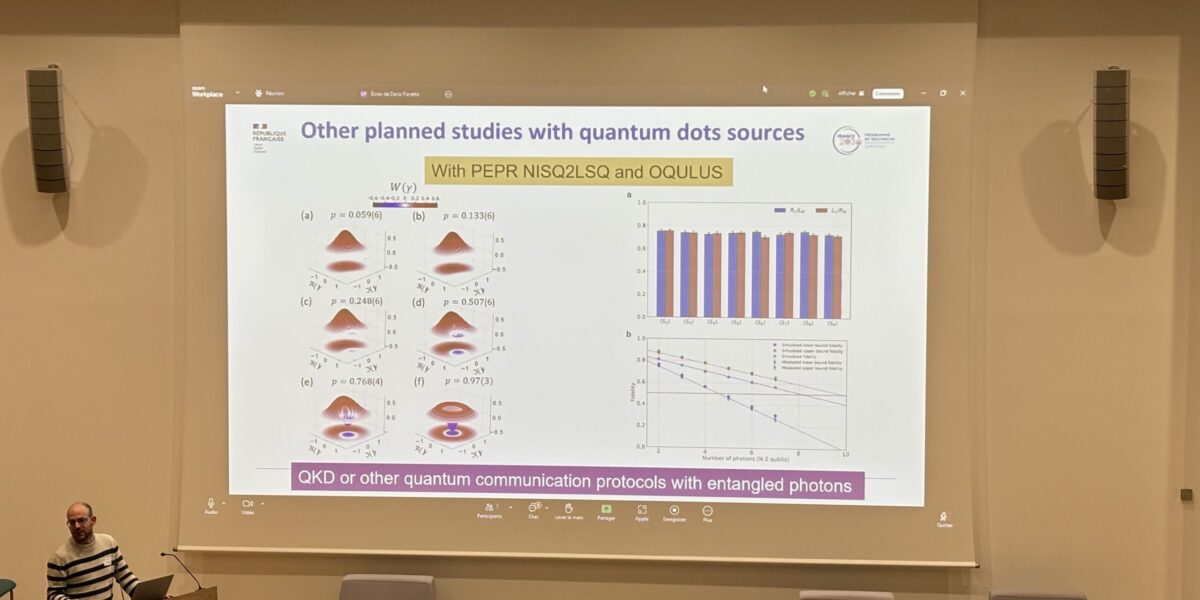
C2N’s role: Development of single-photon sources using quantum dots. Implementation of a ‘twin-field’ QKD protocol. Collaboration with the NISQ2LSQ and OQuLus projects under the PEPR Quantum.
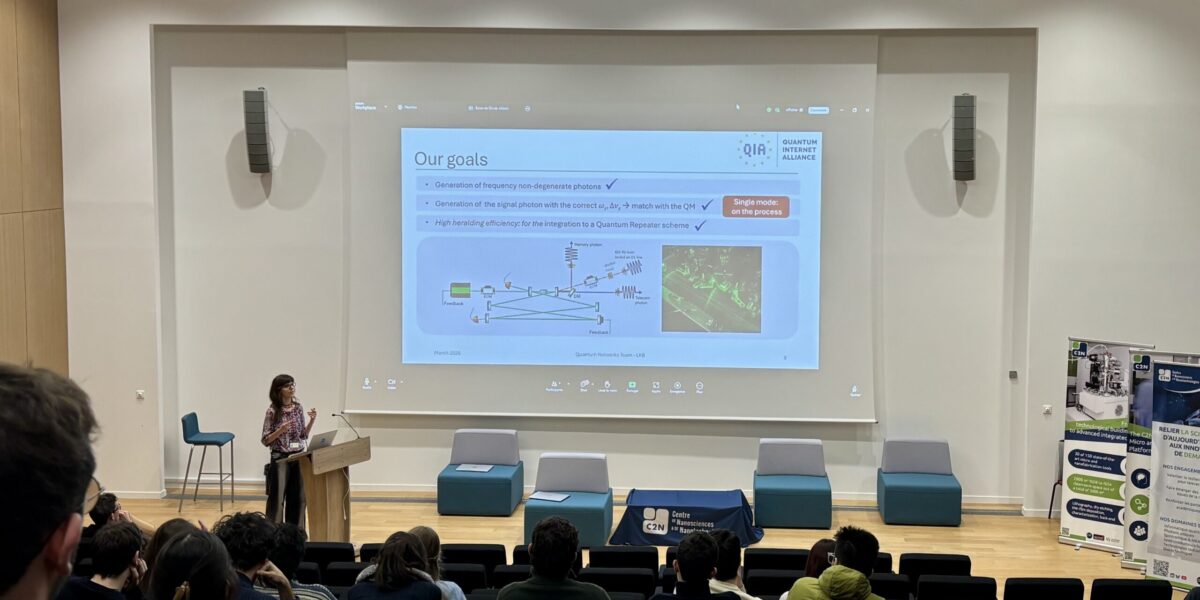
- Session by Ioanna Katsavou, PhD student at Sorbonne Université at LKB
LKB’s role: Development of photon-pair sources compatible with quantum memories and telecommunications networks, with a view to creating a quantum repeater architecture.
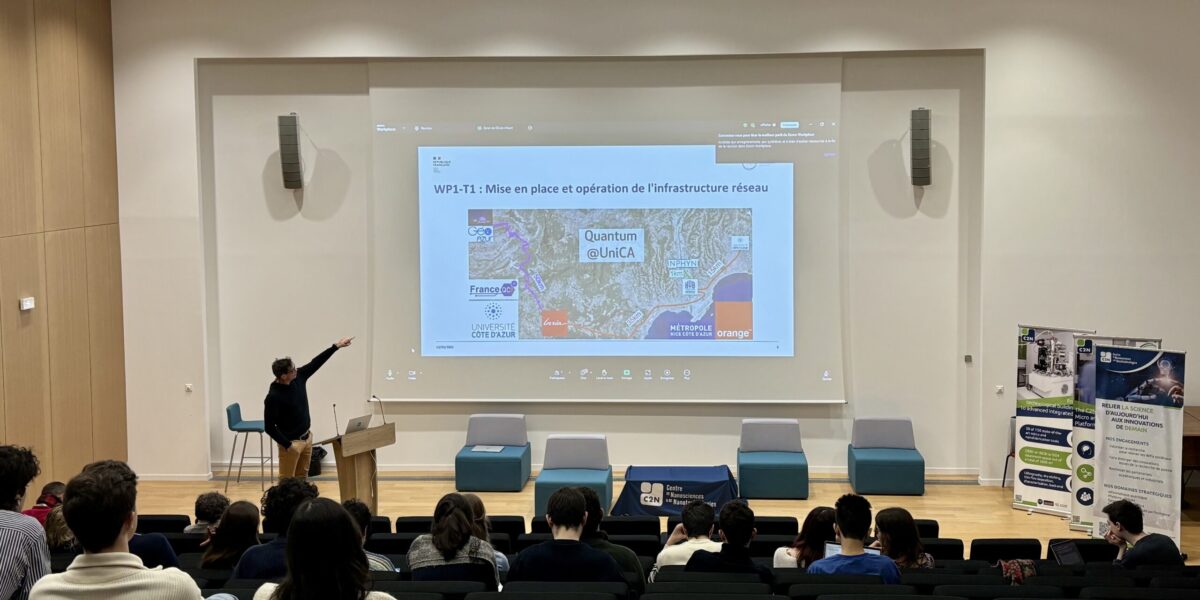 Olivier Alibart, enseignant-chercheur Université Côté d’Azur à l’INPHYNI et co-coordinateur du projet QCommTestbed. © PEPR Quantique
QMemo – scientific sessions
- Session by Thierry Chanelière, CNRS research director at Institut Néel
Institut Néel’s role: Photonic integration of doped crystals.
- Session by Jean Etesse, CNRS researcher at INPHYNI
INPHYNI’s role: Low-vibration waveguides and cryogenics for integrated quantum memories.
- Session by Jean-Emmanuel Broquin, lecturer and researcher at Institut Polytechnique de Grenoble at CROMA
- Session by Philippe Goldner, CNRS research director at IRCP
IRCP’s role: Use rare-earth-doped crystals for integrated quantum photonics. Collaboration with the PEPR’s RobustSuperQ project.
- Session by Jean-Gabriel Pipelin, PhD at Sorbonne Université at LKB
LKB’s role: Development of optical quantum memories using cold atoms.
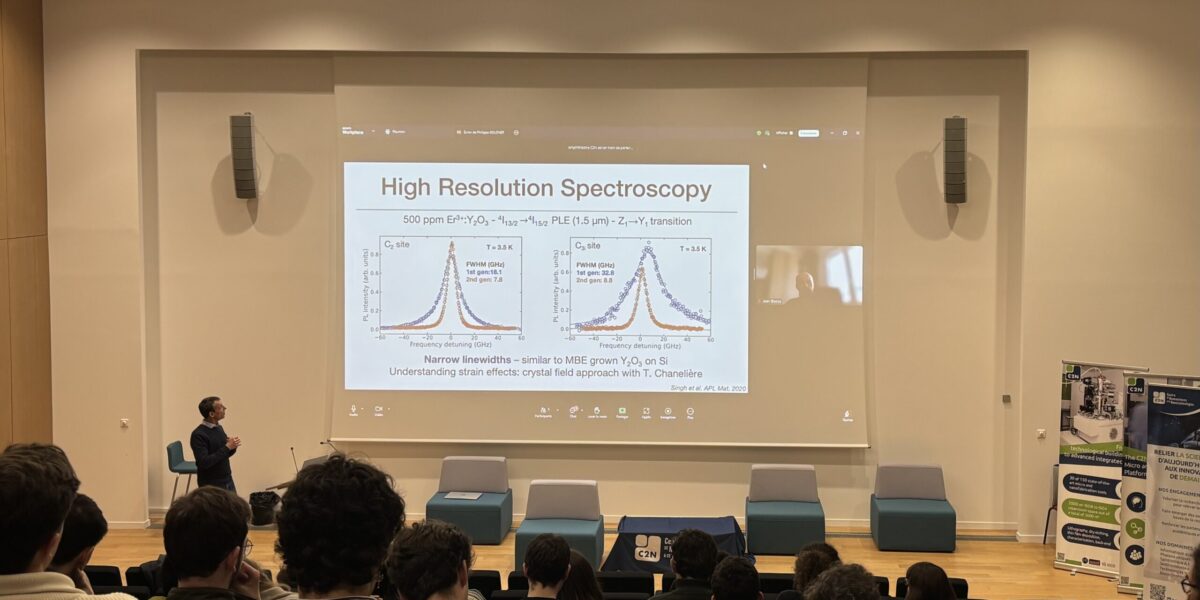 Philippe Goldner, directeur de recherche CNRS à l’IRCP. © PEPR Quantique
DIQKD – scientific sessions
- Session by Yuzhe Zhang, CEA post-doc at IPhT
IPhT’s role: Optimisation of quantum key exchange protocols and security proofs, in order to adapt them to experimental constraints and simplify their implementation.
- Session par Enky Oudot, post-doc at Sorbonne Université at LIP6
LIP6’s role: Development of new protocols to take quantum key exchange experiments out of the laboratory.
- Session par Arthur Chorley, PhD student at Université Côte d’Azur at INPHYNI
INPHYNI’s role: Experimental implementation of the development of a so-called device-independent quantum key exchange protocol based on photonics.
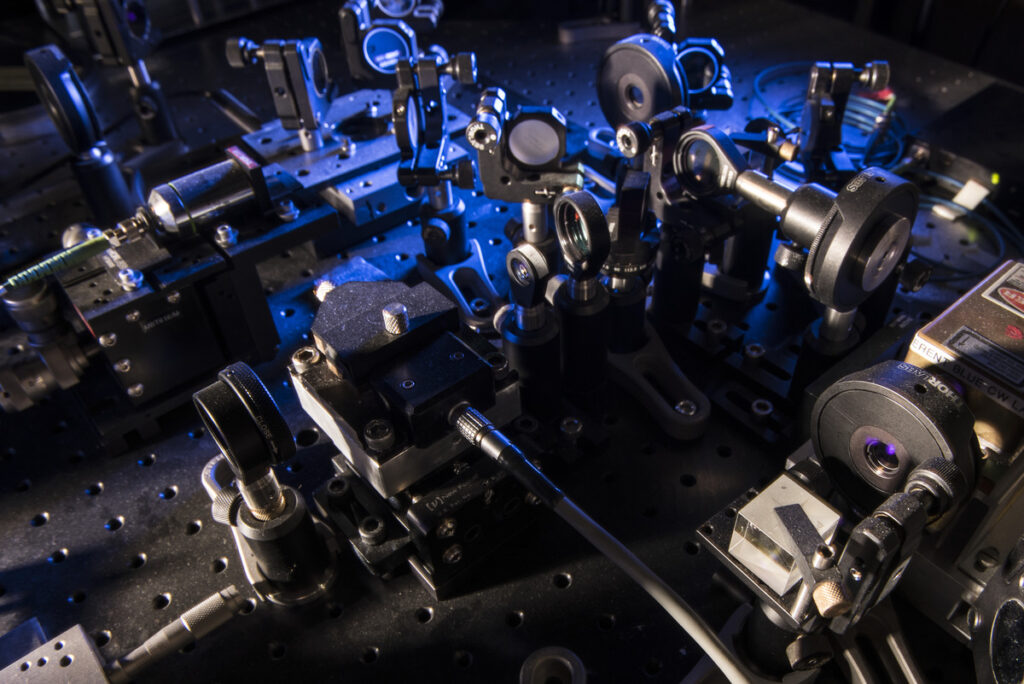
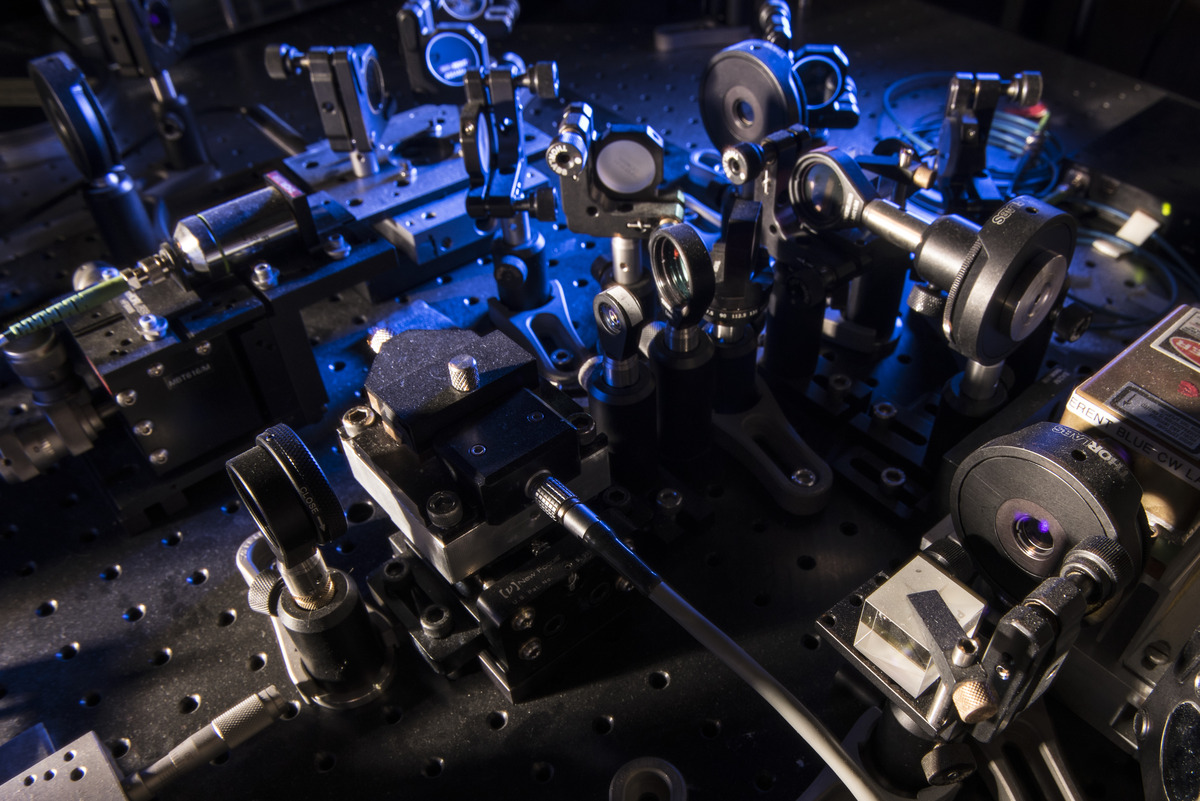
Image: © Hubert RAGUET/LKB/CNRS Image
Latest news
No news
More news Events