A look back at MolQif’s 2026 annual meeting
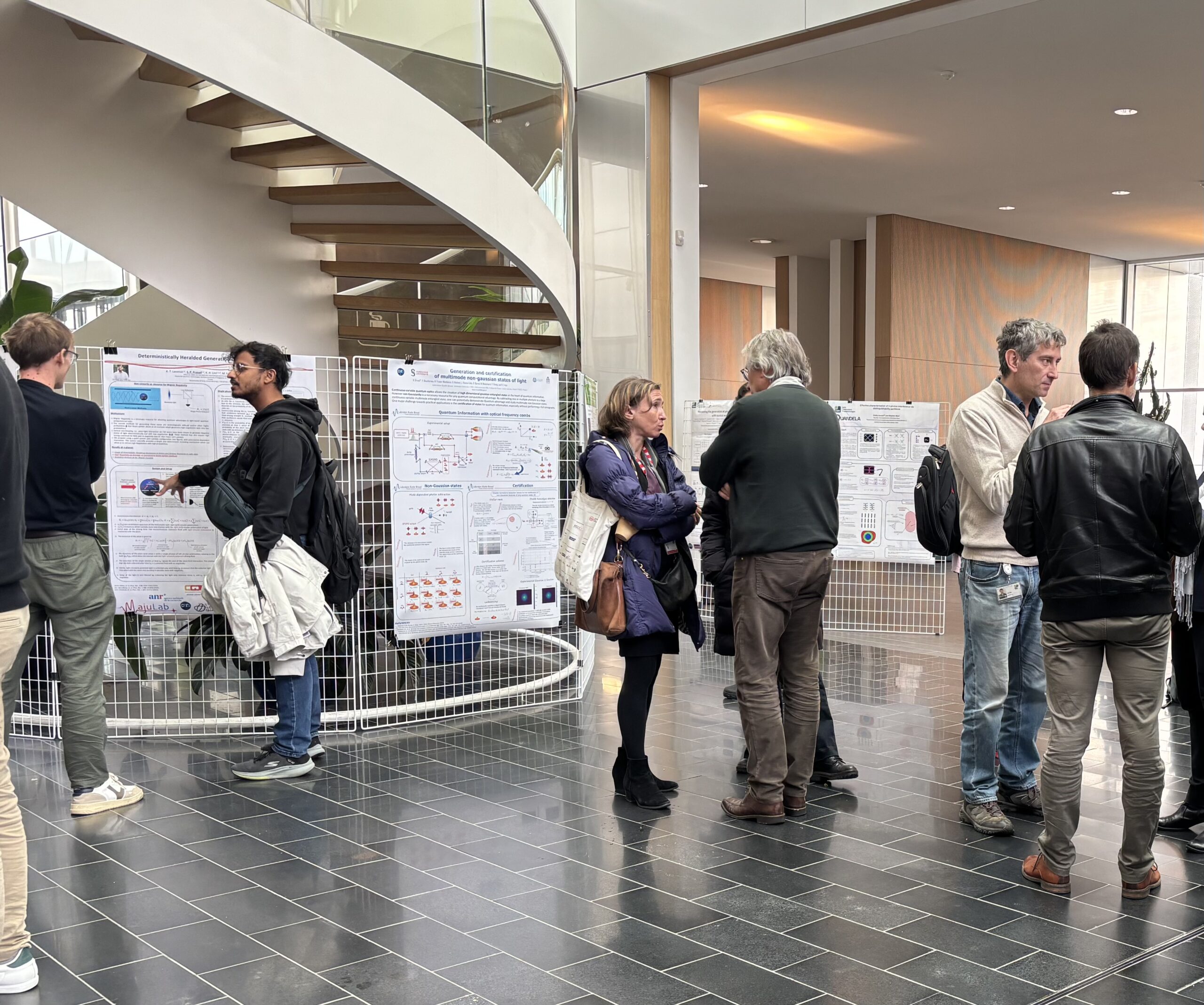
The MolQif project of the PEPR Quantum organised its annual meeting on 9 and 10 February 2026 at the École Polytechnique. Today, we look back on this first edition of this intensive training-focused event, which brought together chemists, physicists, theoreticians and quantum scientists.
This year’s format centered on in-depth lecture courses designed to align participants across disciplines and establish a shared scientific foundation.
Led by Talal Mallah (Paris Saclay University) and Grégory Nocton (École Polytechnique), MolQif aims to explore the potential of paramagnetic complexes to act as robust, solid-state spin-based quantum bits for quantum information processing.
In summary
The 16-hour advanced program delivered by Alessandro Lunghi, Serge Gambarelli, and Arzhang Ardavan provided a comprehensive journey from the fundamentals of spin dynamics to quantum information processing with molecular spins. It began with the theoretical framework of density matrices, relaxation and decoherence, and ab initio open quantum systems approaches, covering modern T₁ theory, spin–phonon coupling, and chemical strategies to control relaxation and dephasing.
The experimental dimension introduced pulsed EPR techniques—pulses, echoes, phase cycling, advanced T₁ and T₂ measurements, dynamical decoupling, and precise determination of dipolar and hyperfine interactions using methods such as Double Electron-Electron Resonance (DEER).
The program concluded by bridging magnetic resonance and quantum computing, translating qubit operations into spin language, analyzing gate errors, introducing BB1 composite pulse strategies for fault tolerance, presenting the Parma scheme for active error correction, and highlighting recent experiments on coupled electron–nuclear spin qubit platforms—offering an integrated perspective from microscopic theory to quantum technologies.
Discover the 3 main topics of the program
- The theoretical foundations of spin dynamics and quantum relaxation in molecules, by Alessandro Lunghi
- Addressing ensembles of molecular electronic spins using pulsed EPR techniques, by Serge Gambarelli.
- Quantum computing and error-correction protocols applied to molecular electron spins, exploiting coupled nuclear spins, by Arzhang Ardavan.
Together, these courses provided a comprehensive bridge between theory, experiment, and quantum information applications in molecular spin systems.
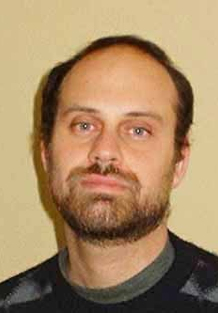
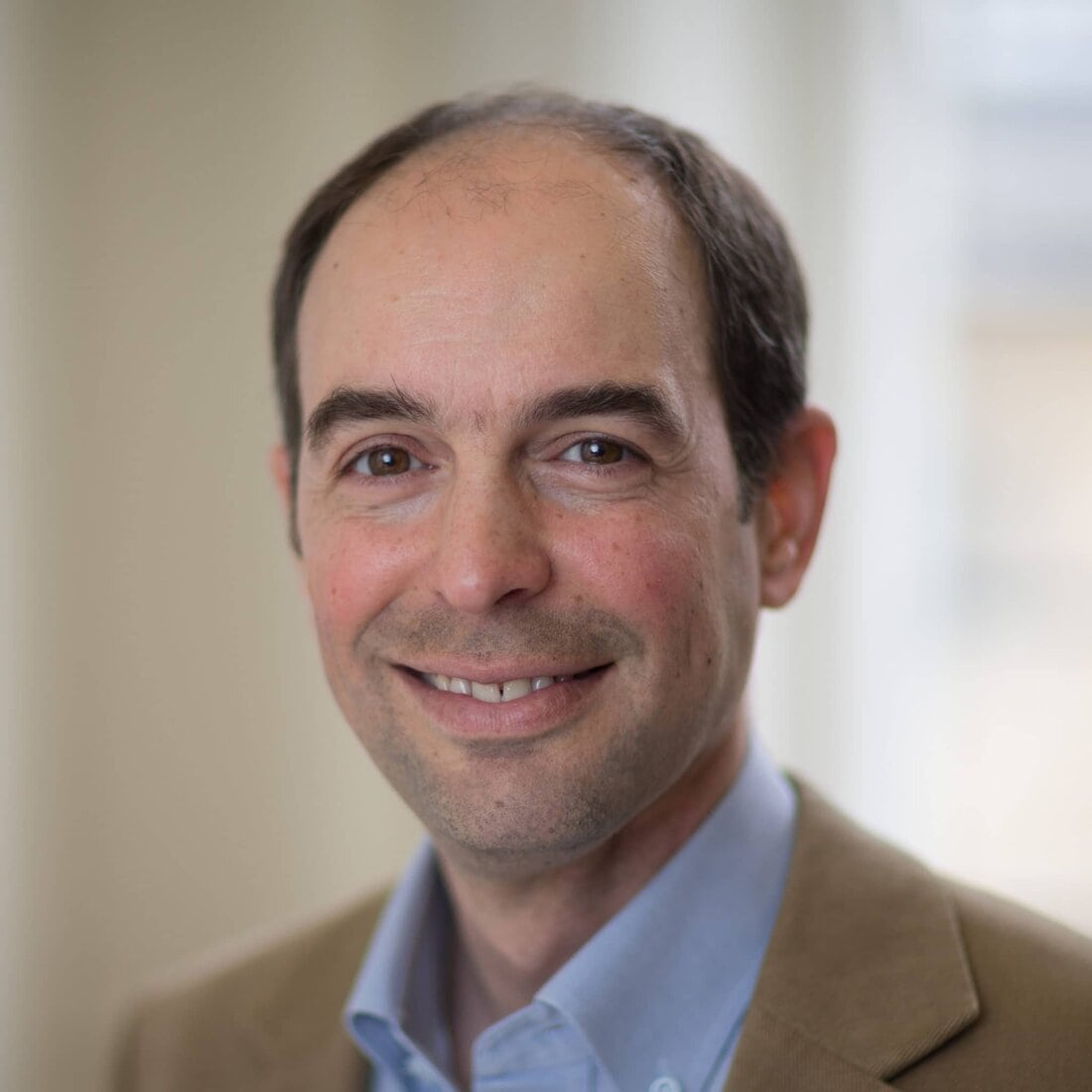
Advanced course on spin dynamics and quantum relaxation
Bridging theory, simulation, and chemical insight—toward predictive quantum materials design.
The first session, conducted by Alessandro Lunghi, began with the basics: density matrix formalism, pure vs mixed states, time evolution, magnetization, and FID—followed by a phenomenological view of relaxation and decoherence and an introduction to ab initio open quantum systems theory (reduced density matrices, time-convolutionless master equations, Markov approximation, and the Lindblad framework).
The core of the course thès focused on relaxation time (T₁): from the pioneering work of Ivar Waller, John Hasbrouck Van Vleck, and Richard Orbach to modern ab initio implementations. Topics include spin Hamiltonians, phonons, spin–phonon coupling, and direct, Raman, and Orbach mechanisms in spin-1/2 and higher-spin systems—plus applications to solid-state defects and chemical strategies to tune relaxation.
Alessandro Lunghi concluded with decoherence: relaxation vs dephasing, flip-flops, correlation cluster expansion simulations, dipolar interactions (electron and nuclear spin baths), phonon-induced dephasing, and design principles to control coherence.
Experimental toolbox of spin resonance
From pulse design to quantitative coupling analysis—turning experiments into microscopic insight.
The course started with pulses, FID, echoes, and the main pulse sequences—introducing phase cycling and the foundations of relaxation time measurements. From there, ESEEM, spectral diffusion, and instantaneous diffusion were explored, followed by advanced methods to measure T₁ (saturation recovery, hole burning) and T₂, including an introduction to dynamical decoupling.
Serge Gambarelli went on to discuss extracting interactions in complex systems. Finally, he explained how to measure electronic dipolar and hyperfine couplings, with special emphasis on Double Electron-Electron Resonance (DEER) for precise electron–electron dipolar distance measurements.
Quantum computing and error-correction protocols
From pulse engineering to quantum error correction—bridging magnetic resonance and quantum computing.
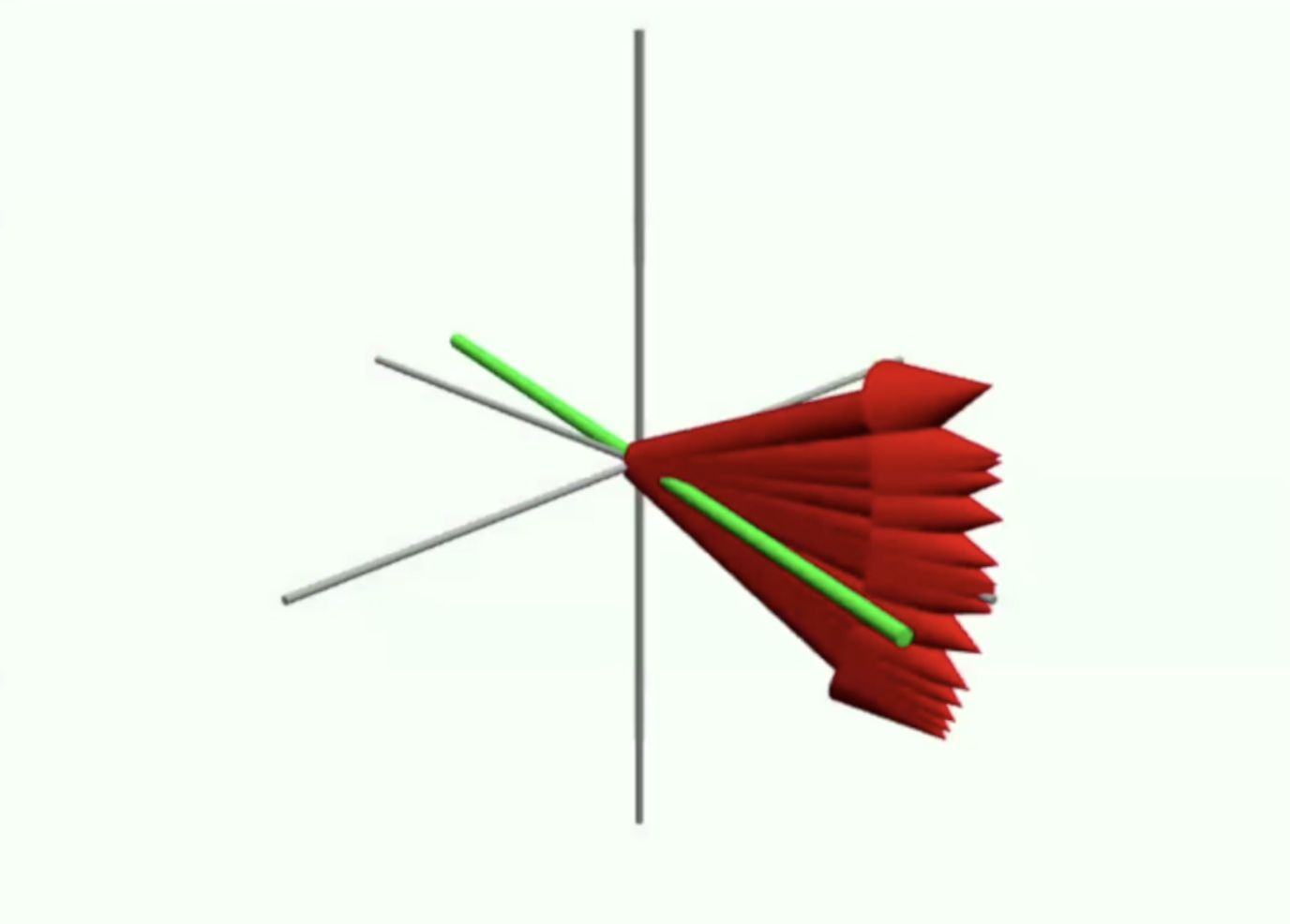
This last module connected pulsed magnetic resonance with quantum information science. Arzhang Ardavan began by aligning terminology and translating quantum information concepts into spin language: qubits, basic operations, and their implementation through simple multi-spin Hamiltonians using magnetic resonance. He then examined gate errors in single-qubit rotations and how multi-pulse sequences enable their precise characterization. A key highlight is BB1 composite pulse—a powerful strategy to correct rotation-angle errors and illustrate practical “fault tolerance.” We contrast this with active error correction and introduce the Parma scheme for qubits.
In conclusion, he referred to a recent experiment demonstrating these ideas using a coupled electron–nuclear spin platform.
Some highlights from the module
Latest news
No news
More news Events