The PEPR Quantum at the French Singaporean Quantum Symposium (FSQS) 2025 in Paris
FSQS 2025 was held at BpiFrance in Paris on November 25th and 26th. This flagship event, which aims to strengthen ties between France and Singapore in the field of quantum technologies, brought together opinion leaders, researchers — including several members of the PEPR Quantum —, industry innovators, end-users and students.
Organised by the CNRS, the National Quantum Office (NQO, Singapore) and Quantonation, this second edition was based on the Memorandum of Understanding (MoU) signed in April 2025 between the CNRS and the NQO. This MoU covered the fields of quantum photonics and quantum energy.
Expansion of the MoU and two new partnerships with French start-ups
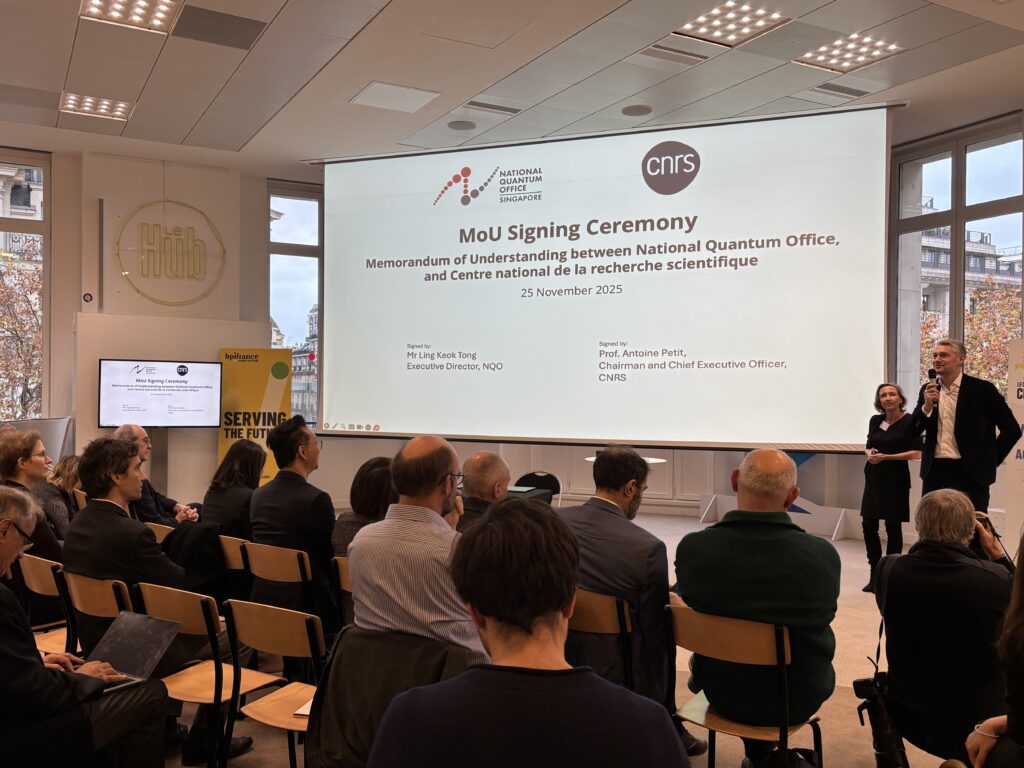
FSQS 2025 marked an opportunity to extend this MoU between the CNRS and the NQO. Antoine Petit, President-director of the CNRS, and Mr Keok Tong Ling, Executive Director of the NQO, signed the agreement at the opening of the event. The MoU now covers quantum computing, with a particular focus on error correction.
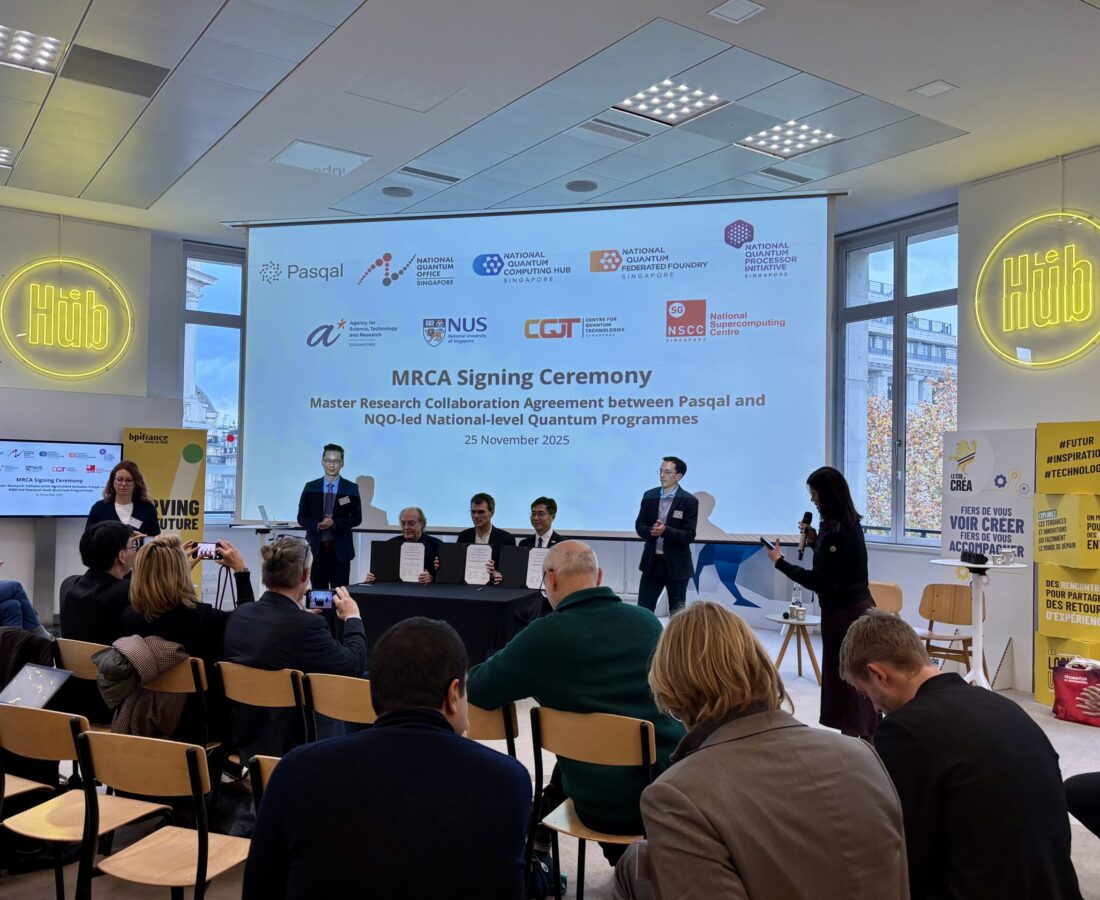
In addition, the symposium formalised two new collaborations between research institutions and industrial partners in both countries. The start-up Pasqal and Singapore’s national quantum programmes led by the NQO* signed a Master Research Collaboration Agreement (MRCA). This agreement establishes a long-term research framework between the French start-up, which specialises in quantum computing and neutral atom processors, and the Singaporean programmes. The objectives of this collaboration are to develop quantum error correction protocols, algorithms and hardware improvements.
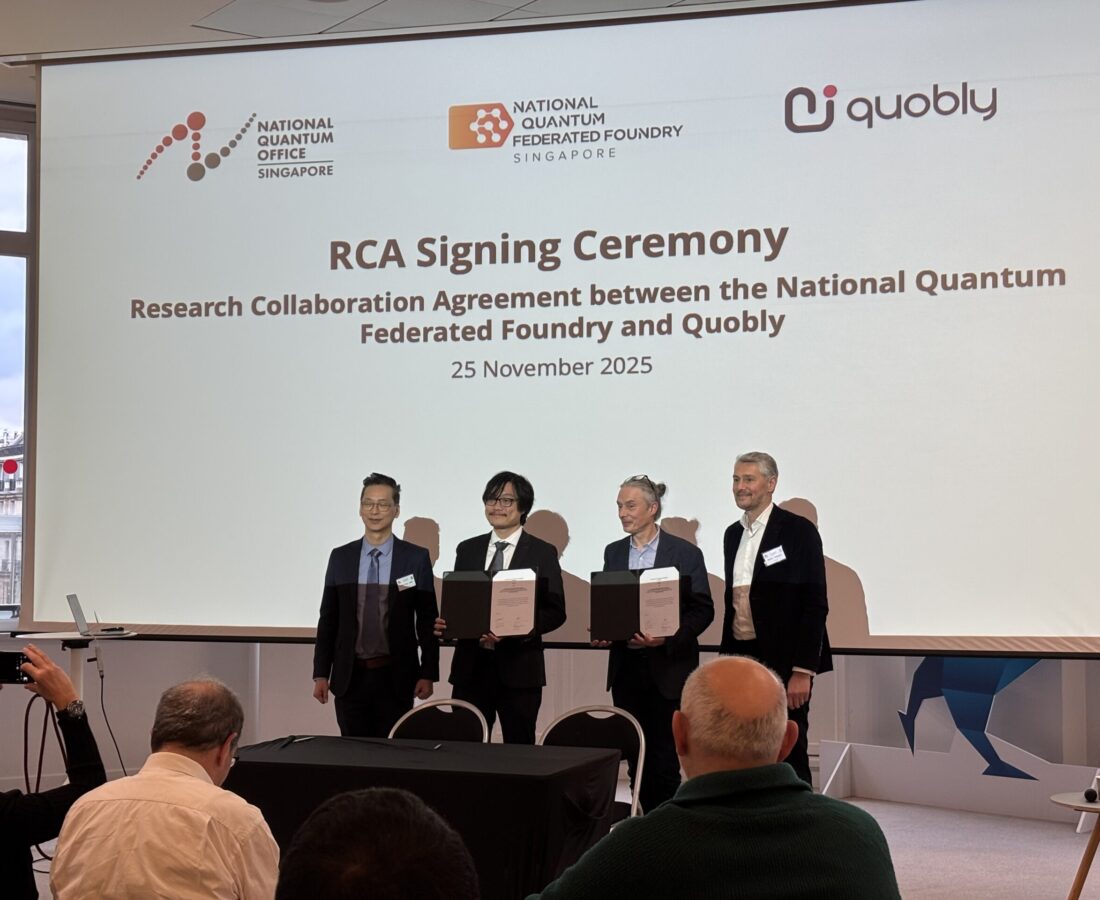
Finally, Quobly and the National Quantum Federated Foundry (NQFF) have signed a Research Collaboration Agreement (RCA). Quobly is a French start-up that develops silicon spin qubit technologies on industrial semiconductor platforms. The collaboration will therefore focus primarily on testing and characterising qubit chips, as well as improving their design to increase their scalability and efficiency.
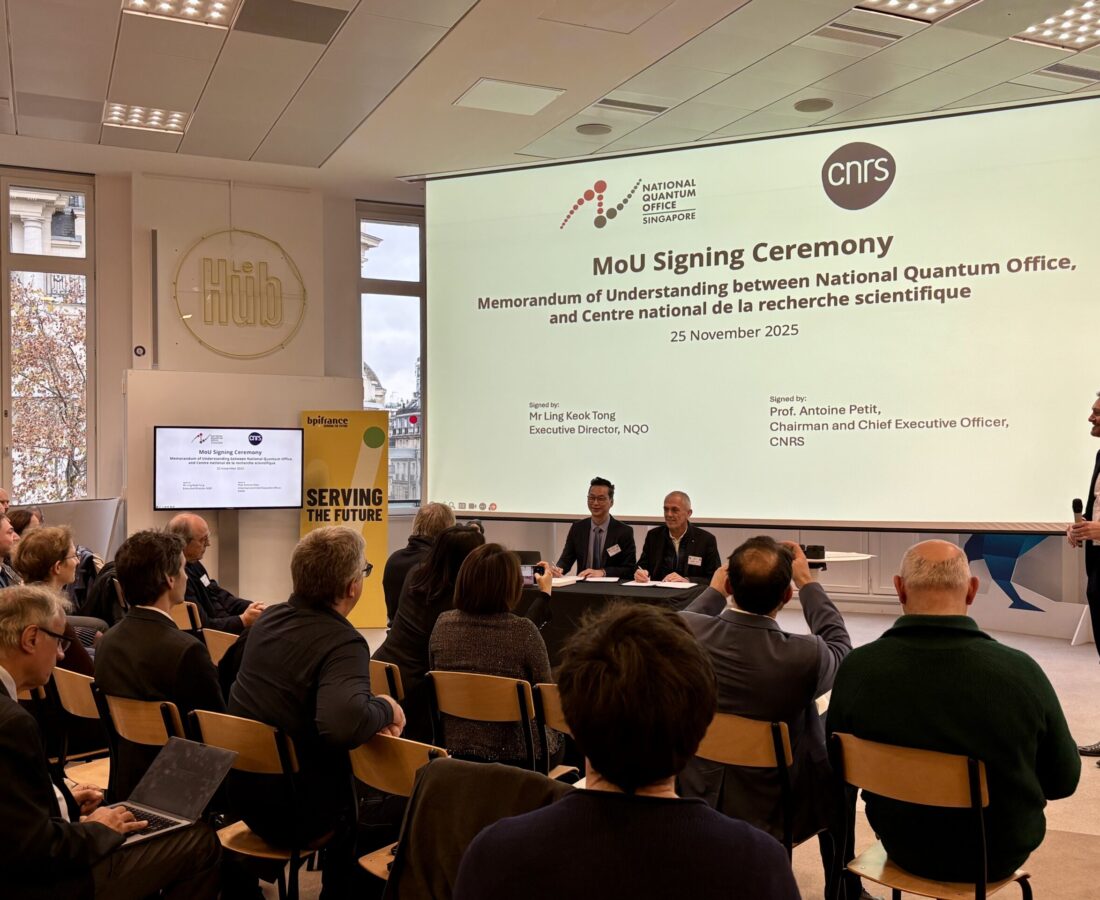 Expansion of the CNRS–NQO Memorandum of Understanding (MoU). © PEPR Quantique
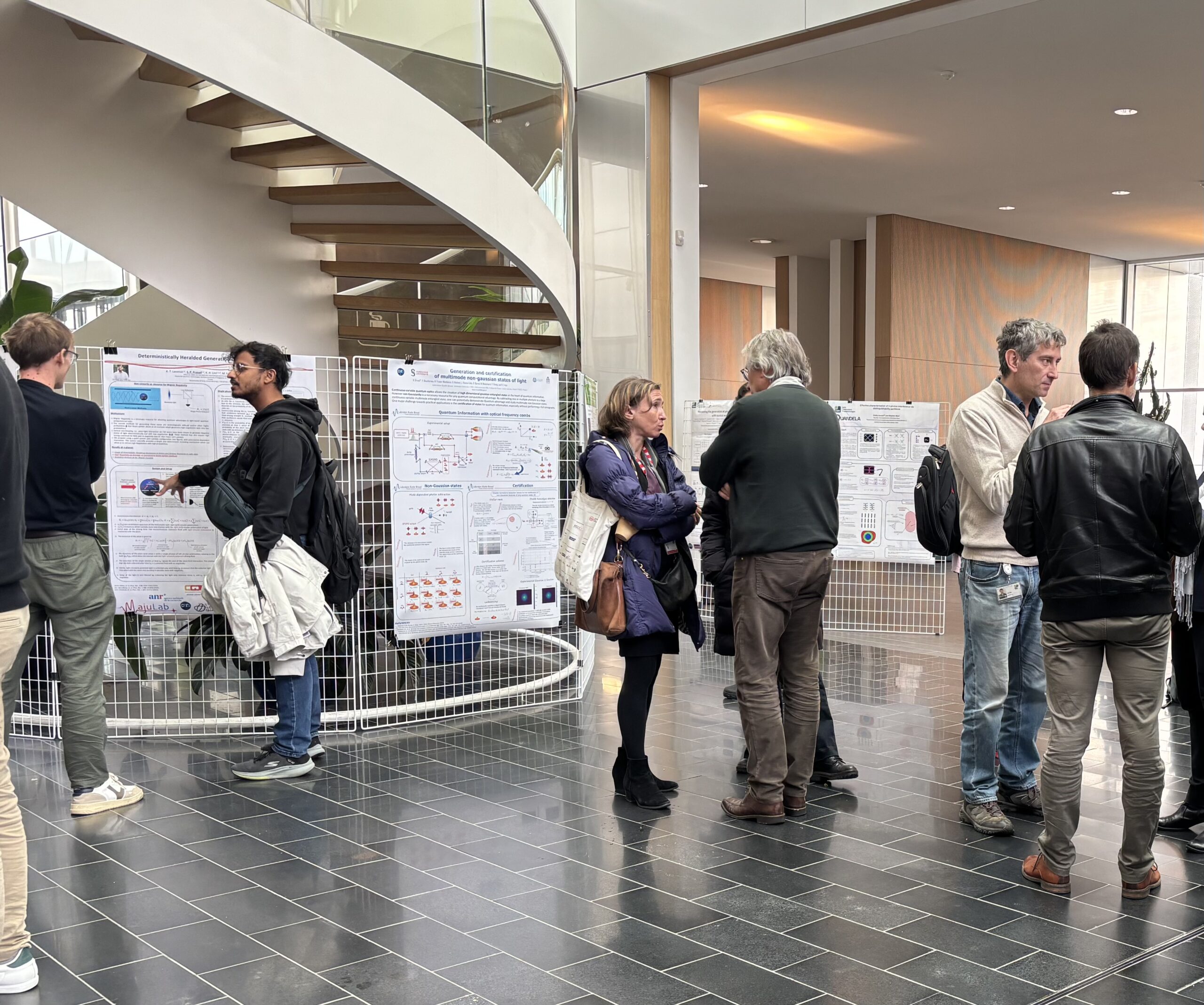
Scientific sessions led by PEPR members
The PEPR Quantum programme was well represented at FSQS 2025 thanks to several scientific presentations by its members. They showcased research conducted in France and abroad in various fields of quantum technologies.
To begin with, Alexia Auffèves, CNRS Research Director and Director of the Majulab International Research Laboratory (IRL) in Singapore, opened the session on ‘Quantum Energy, State of the Art and Prospects’. She presented the Quantum Energy Initiative, launched in 2022, which aims to optimise the energy efficiency of quantum machines. Beyond this topic, Majulab is collaborating with the PEPR’s NISQ2LSQ, OQuLus and QUTISYM projects.
Software and hardware
Iordanis Kerenidis, CNRS research director at the Institute for Research in Fundamental Computer Science (IRIF, CNRS / Paris Cité University) and co-founder of the start-up Quantum Signals, took part in the session on quantum software and algorithms. He is involved in the PEPR Quantum programme via the EPIQ project. On the hardware aspect, Thierry Lahaye, CNRS Research Director at the Charles Fabry Laboratory (LCF, CNRS / IOGS), co-founder of Pasqal and member of the QubitAF project, gave a presentation on cold atoms.
Quantum communication
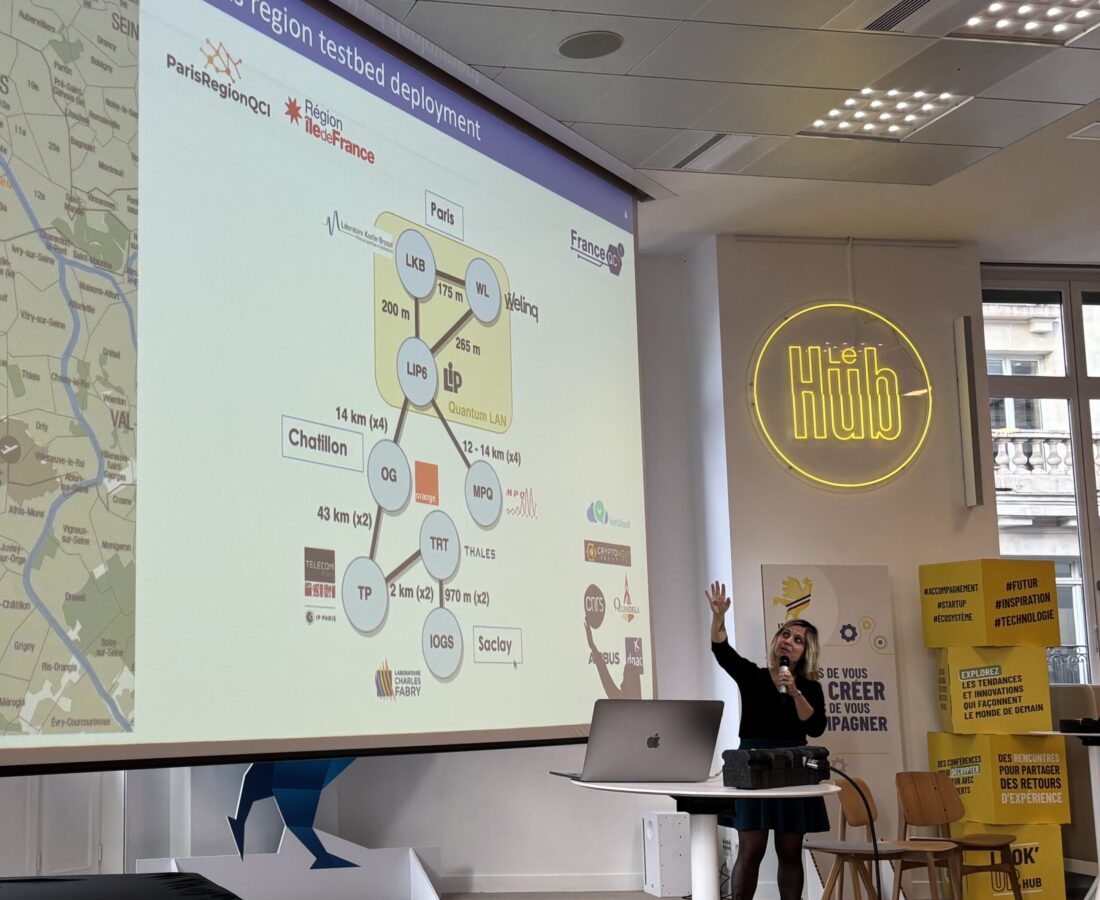
Eleni Diamanti, CNRS research director at LIP6 (CNRS / Sorbonne University) and co-leader of QCommTestbed, gave a lecture on quantum communication. She mentioned the quantum network deployed in the Ile-de-France region, which establishes connections between laboratories in Paris (LKB, LIP6 and Welinq), Chatillon (Orange) and Saclay.
Quantum photonics
Next, the session on quantum photonics welcomed three members from three different projects in the programme. Among them were:
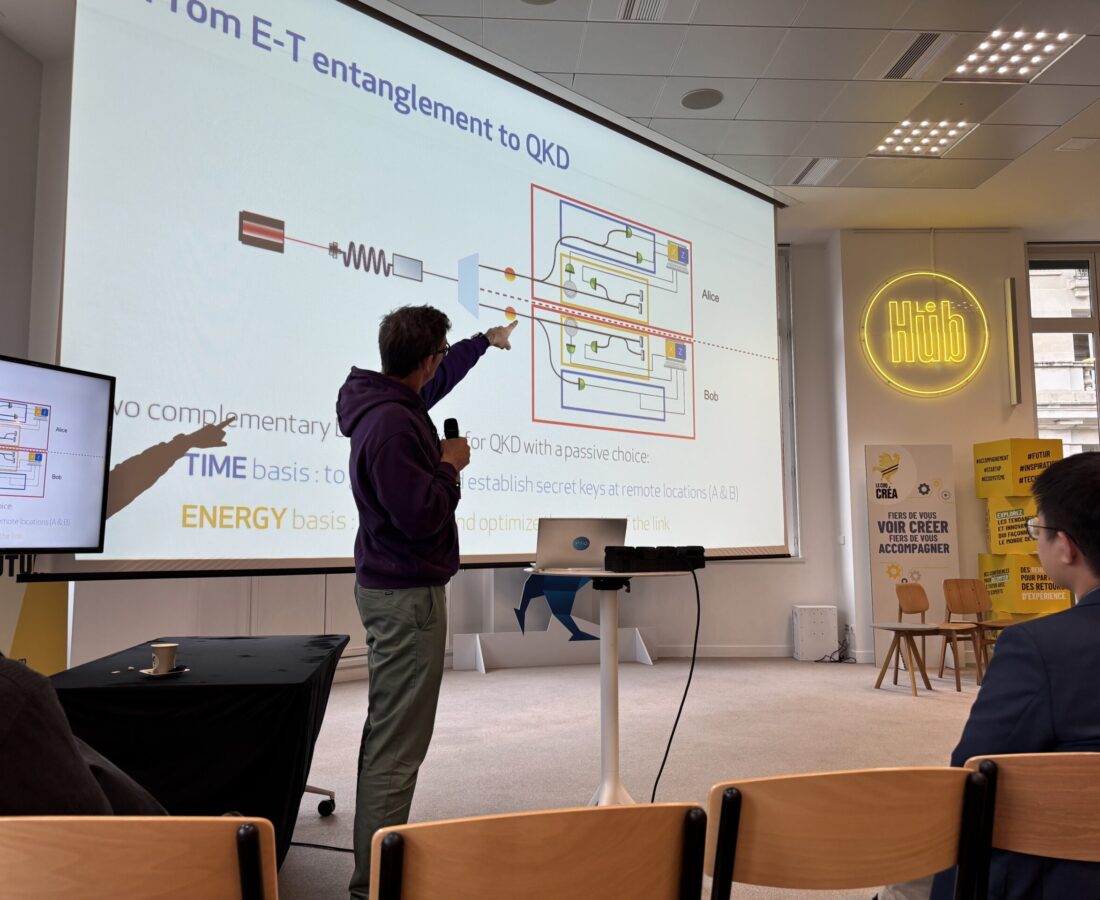
- Olivier Alibart, senior lecturer at Université Côte d’Azur at the Nice Institute of Physics (INPHYNI, CNRS / Université Côte d’Azur). Co-leader of the QCommTestbed project alongside Eleni Diamanti, he spoke about the secure quantum network on the Côte d’Azur.
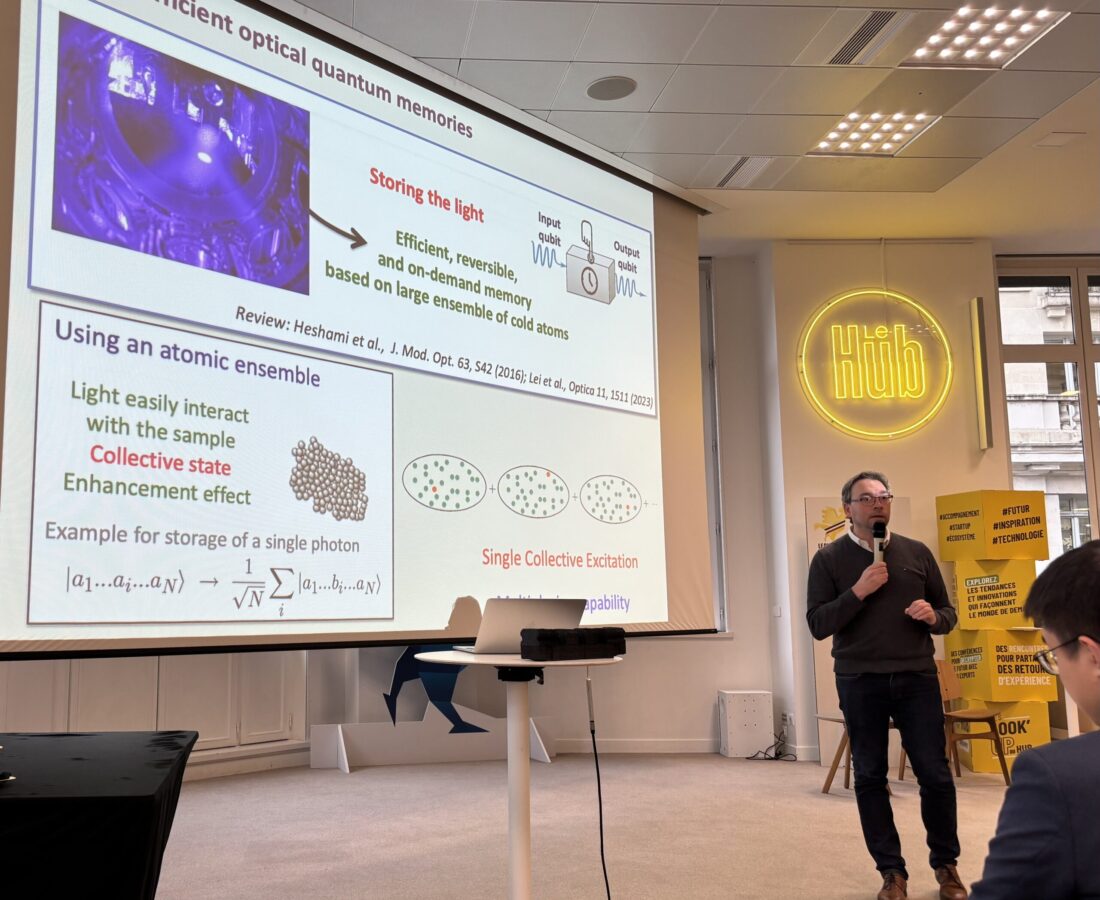
- Julien Laurat, professor at Sorbonne University at the Kastler Brossel Laboratory (LKB, CNRS / Collège de France / ENS-PSL / Sorbonne University). He discussed quantum repeaters and memories in relation to the QMemo project, which he coordinates.
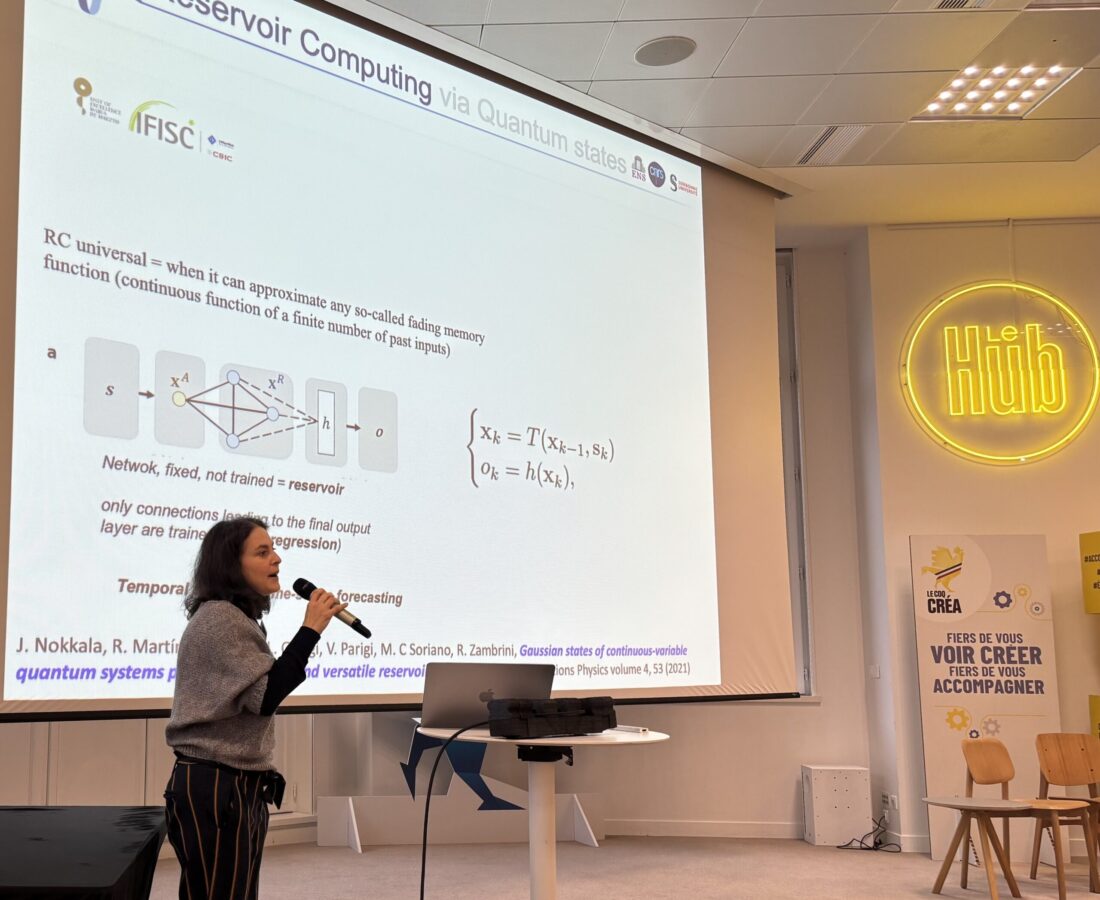
- Valentina Parigi, lecturer and researcher at Sorbonne University at the LKB and member of OQuLus.
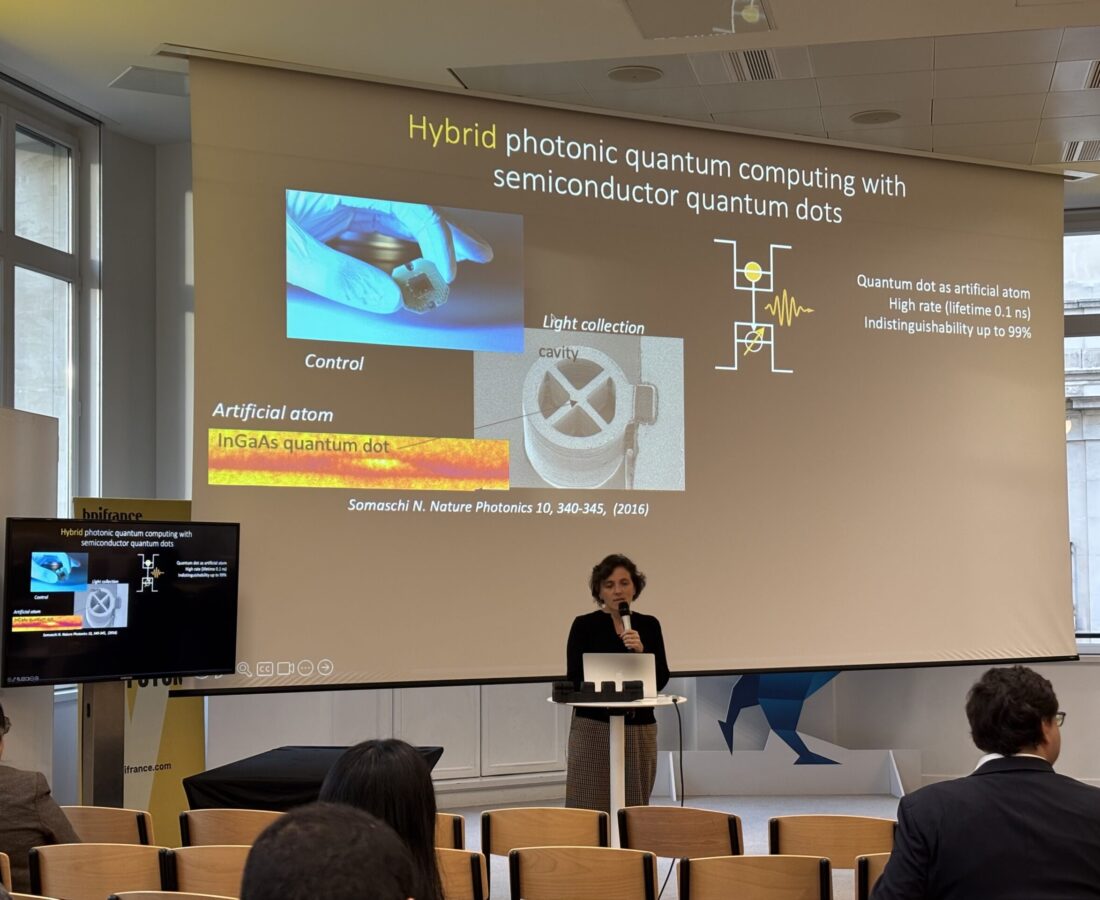
This topic was also the subject of a specific keynote speech. This was delivered by Pascale Senellart, CNRS research director at the Centre for Nanosciences and Nanotechnologies (C2N, CNRS / Paris Saclay University), co-founder of Quandela and leader of the PEPR’s OQuLus project. Her speech focused on hybrid photonic quantum computing with quantum dots.
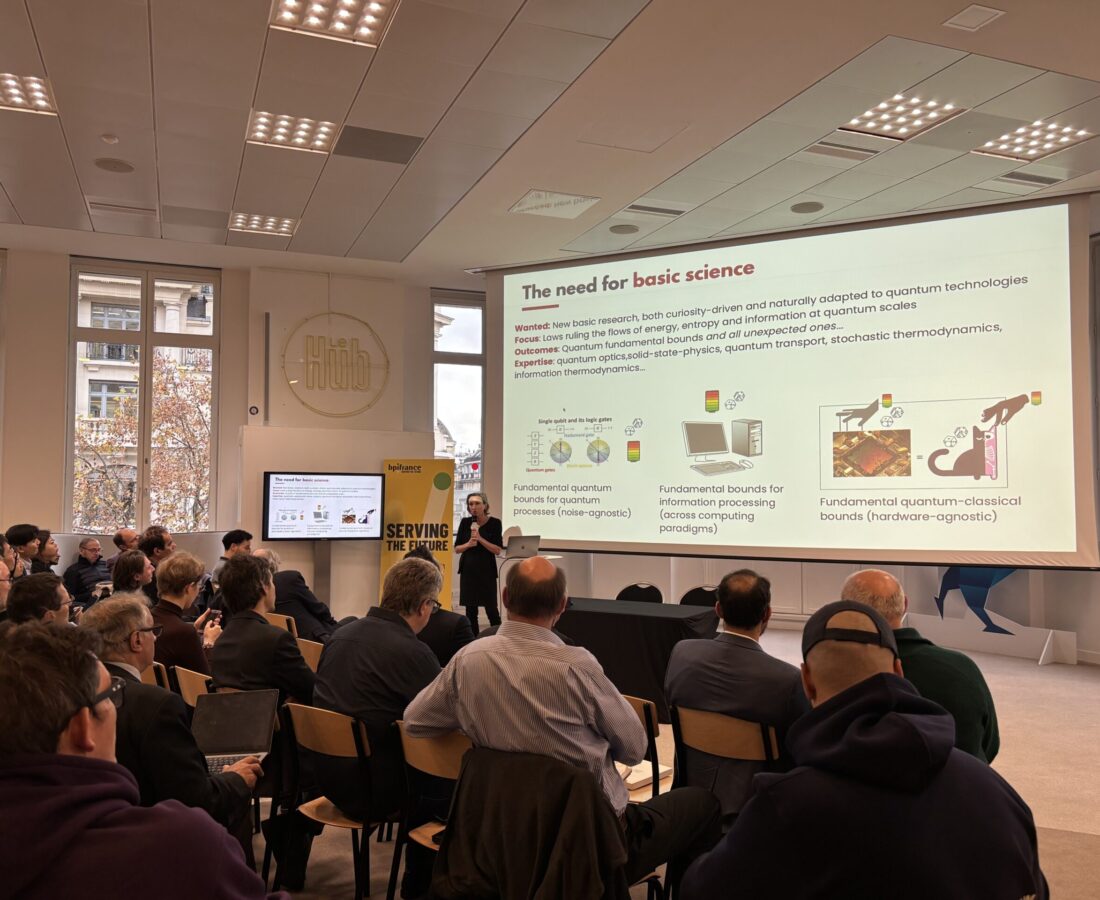 Alexia Auffèves, CNRS research director and director of IRL Majulab. © PEPR Quantique
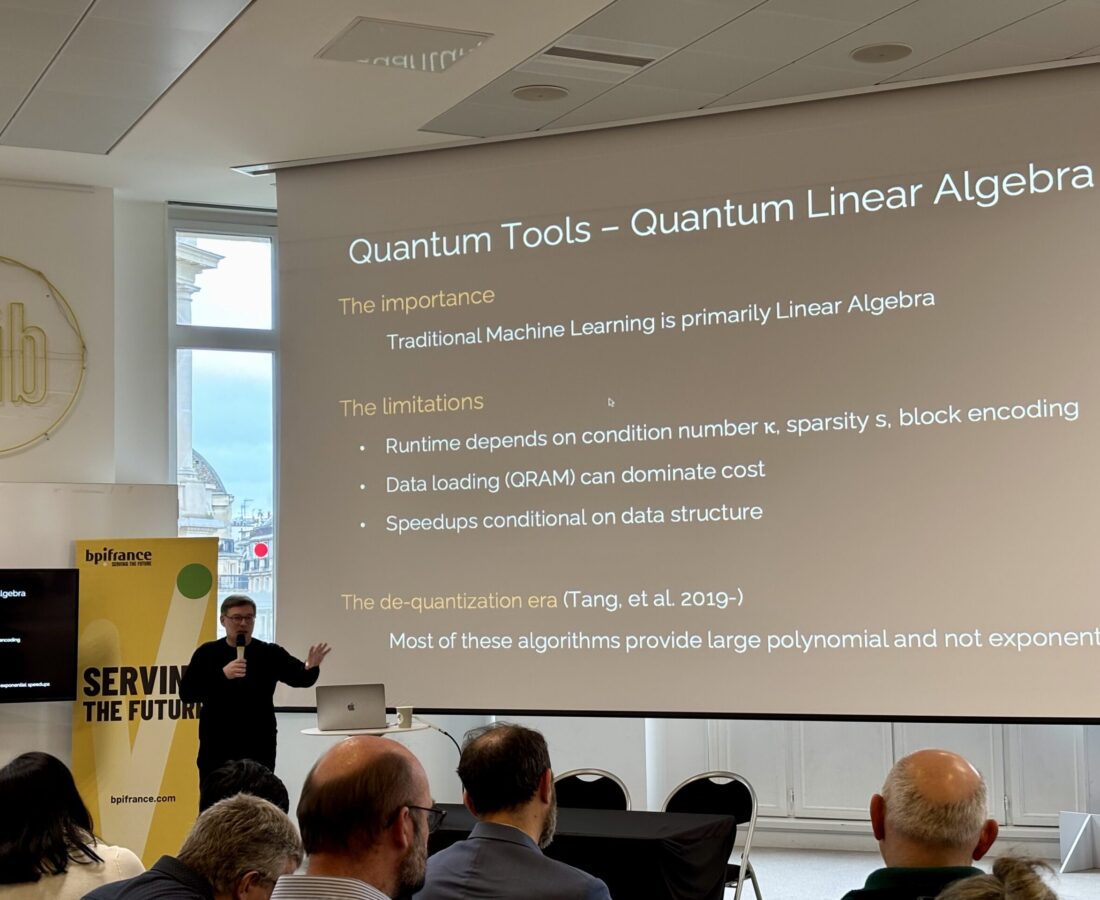
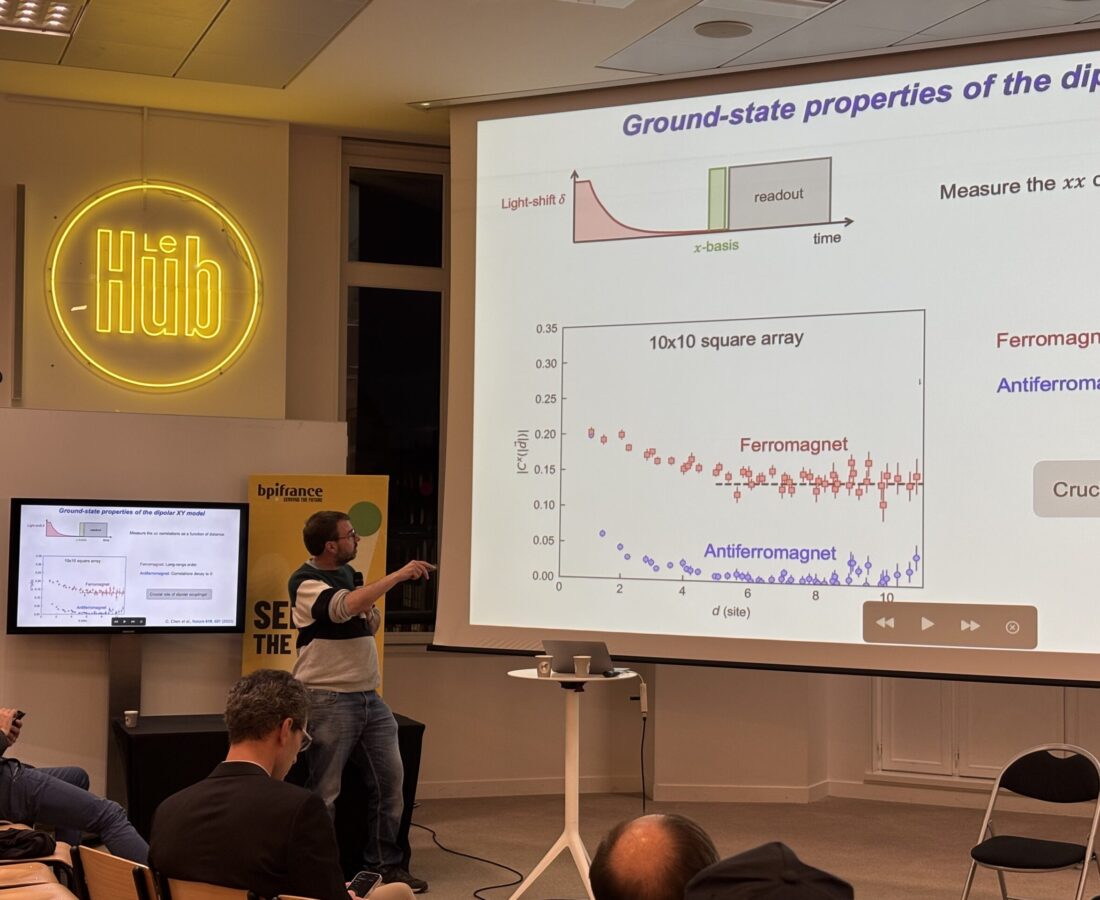
Presentation of some programmes from the French National Quantum Strategy
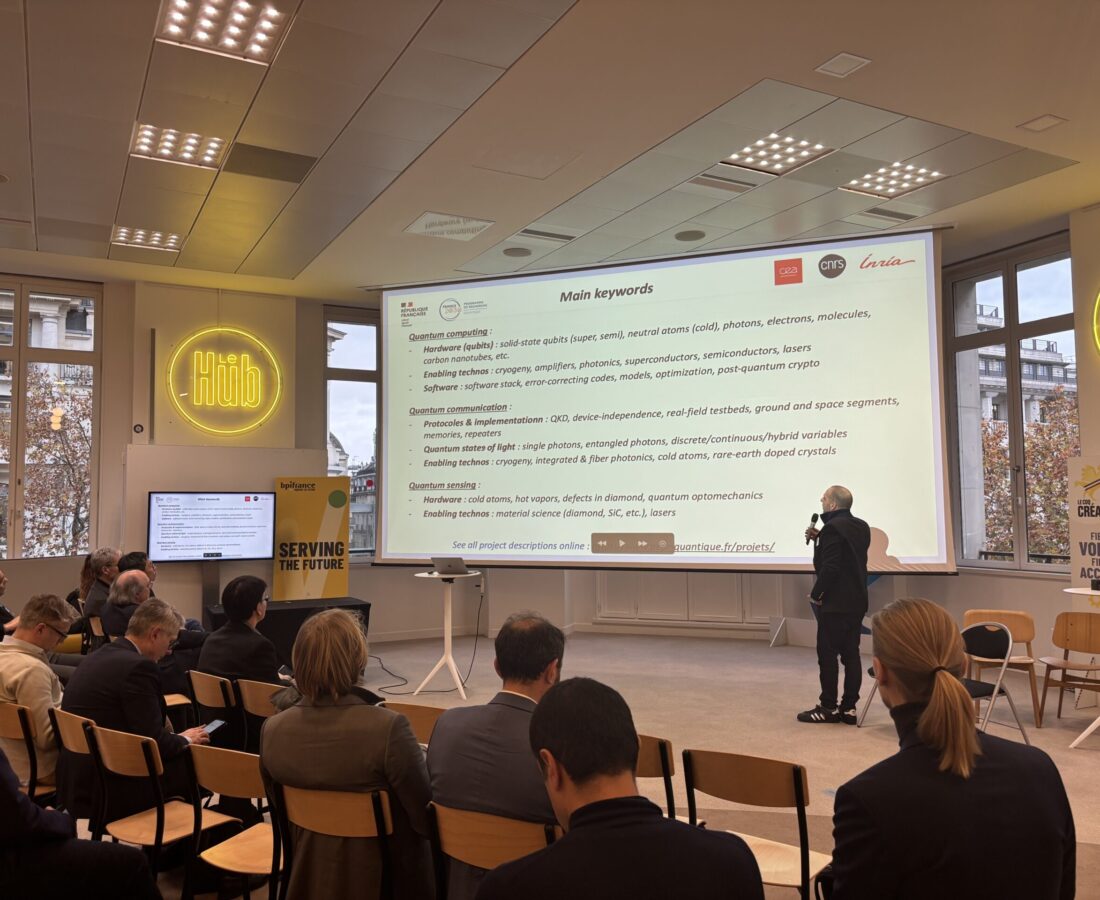
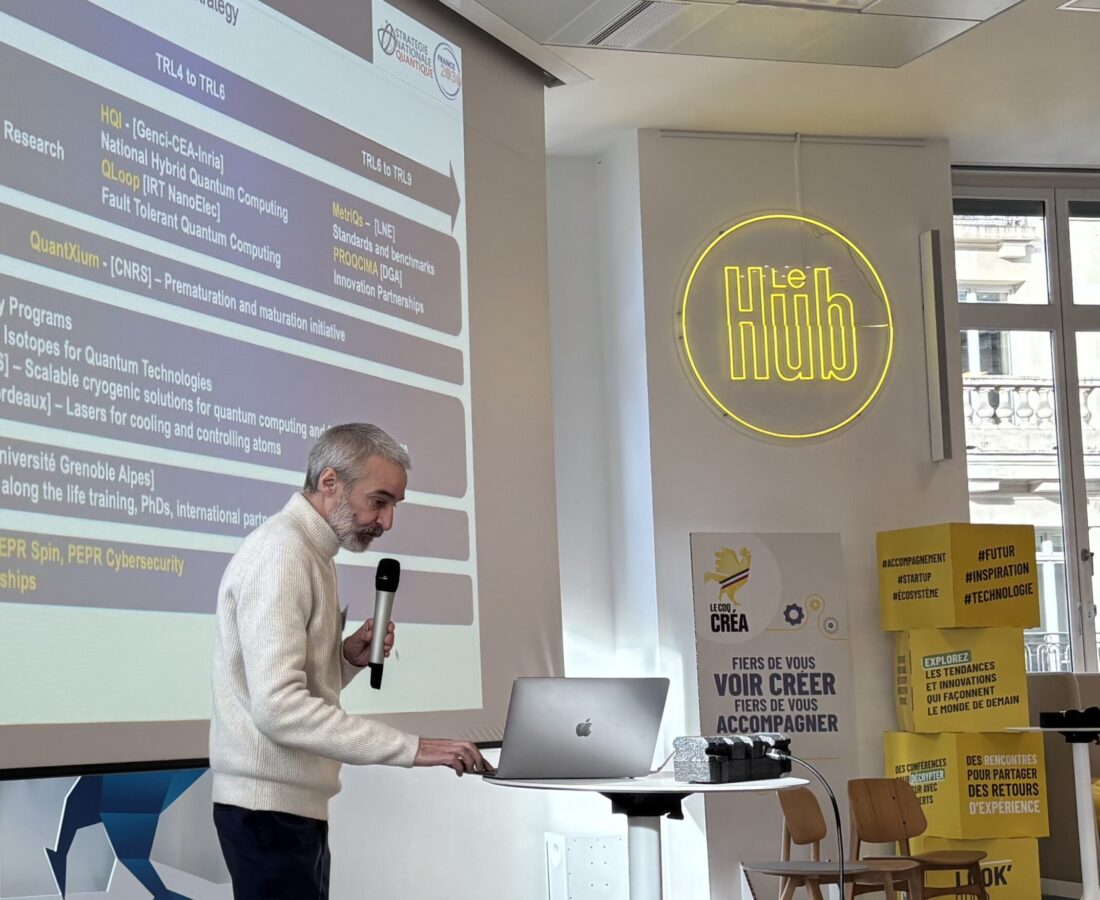
FSQS 2025 provided an opportunity to highlight the French National Quantum Strategy (SNQ). First, Sébastien Tanzilli, director-coordinator of the programme for the CNRS, focused on the PEPR. He highlighted its areas of research, its missions and objectives, and the 22 projects that comprise it. It was also an opportunity to highlight the programme’s collaborations with industry, given that each project is linked to at least one start-up.
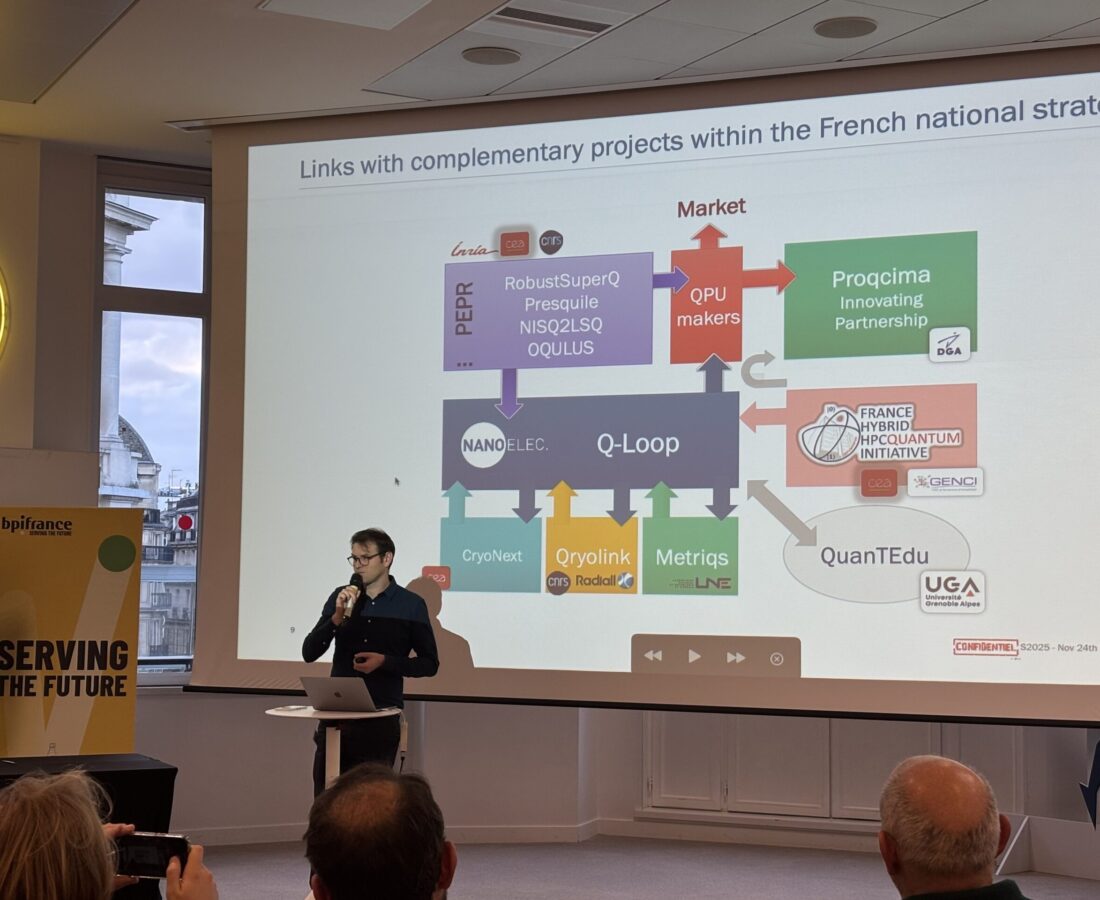
Frédéric Barbaresco, quantum algorithms expert at Thalès, highlighted the MetriQs-France programme. With a budget of €13 million, the programme’s mission is to coordinate the development of measurement standards adapted to quantum technologies and enabling technologies, as well as the evaluation of these emerging technologies. Tanguy Sassolas, head of the quantum and high-performance computing programme at the CEA, then gave a presentation on Q-Loop. This programme aims to meet the challenge of scaling up solid-state qubit control and readout chains. Finally, Franck Balestro, professor at the University of Grenoble Alpes, spoke about the QuantTEdu-France programme. This programme supports the emergence of new talent and the adaptation of training in quantum science and technologies.
 Sébastien Tanzilli, programme director-coordinator for the CNRS. © PEPR Quantique
*National Quantum Processor Initiative (NQPI), National Quantum Computing Hub (NQCH) and National Quantum Federated Foundry (NQFF).
Banner image : Alexia Auffèves, CNRS Research Director and Director of Majulab and Olivier Tonneau, Partner at Quantonation. © PEPR Quantique
Written by Lauren Puma
Latest news
No news
More news Events